


Rescuing ex-battery caged hens: an eye-opening experience
My experience of rescuing ex-battery hens, what I learned and how you can help to.
 Abbie Newing


My experience of rescuing ex-battery hens, what I learned and how you can help to.
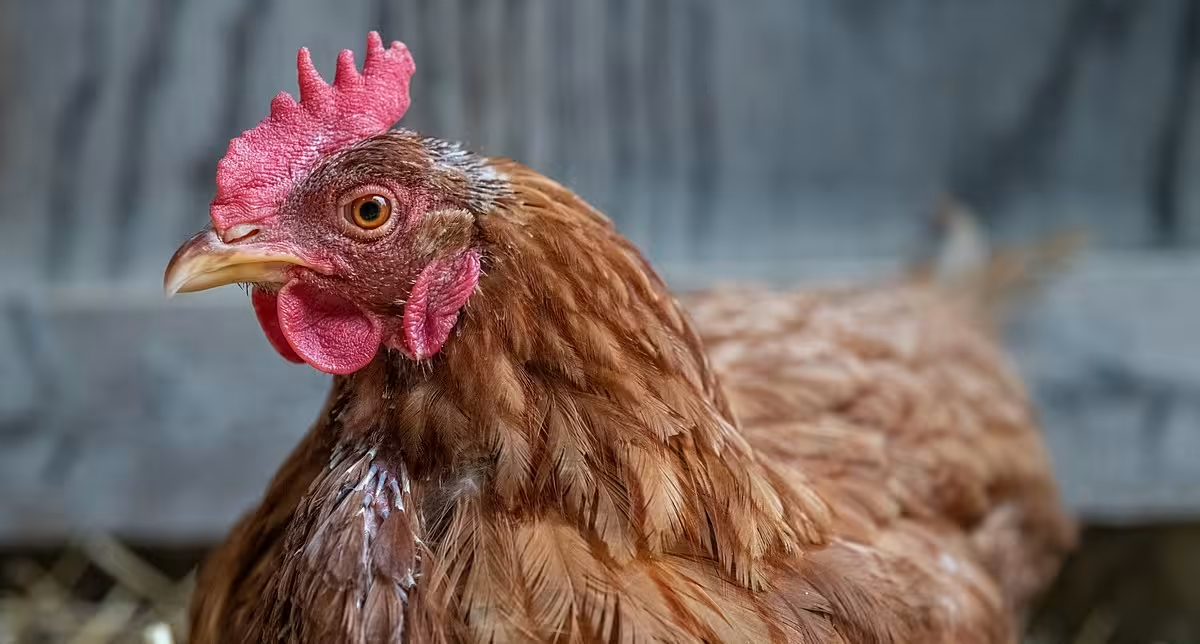


Around 2012, my family and I decided to rescue four hens who had come from battery cages. A large number of hens had been left by the roadside, with a message saying that they were free for anyone to rescue if they were able.
Fortunately, we had a very large garden at the time with space for hens and were able to take four. These hens were likely out for rescue due to the EU-wide ban on the use of battery cages which came into effect in 2012.
When I say ‘battery cages’, I am referring to the system where egg-laying hens were kept in rows of tiny identical barren cages. This system was immensely cruel to hens, as it prohibited them from performing most of the natural behaviours that hens enjoy, such as dust bathing, stretching their wings, foraging and even the most basic things such as walking or perching. Sadly, hens kept in battery cages typically had a usable living space per hen less than the size of a piece of A4 paper.
Caring for the hens
When they arrived with us, the hens were in very poor condition; they were very lethargic, timid and shy. Notably, they had very pale combs on their heads which were flopped over, a sign of poor health. They also all had many feathers missing - a sure sign of feather pecking, which hens do when in distress.
Initially, we kept them in a large coop that had an enclosed outdoor area while we built a larger enclosure with a hen house. The outside area in the coop had a small patch of wire just outside the entrance to the indoor area and at first all four hens huddled together, only standing on the wire; it was all that they were used to.
However, after a couple of days, the hens ventured onto the grass and things took off from there. Over the next few weeks, they came out of their shells as they were able to perform behaviours natural to them as hens: foraging in grass for the first time, taking dust baths in an area of non-grassy ground that we provided for them (which is very important for hens!) and generally exploring and living their best life. Very sweetly, over just four weeks or so, their combs literally perked upright and transformed into a plush, healthy red colour. It was really wonderful to see.
Even more sweetly, as they came out of their shells, it became clear that each hen had their own individual personality; one liked to sunbathe more than the others, one had a favourite spot in the hen house where she liked to sleep, and one was particularly tame and liked to be hand-fed. One of our hens notably liked to come and sit on our laps and be fussed over!
In the photo below, you can see one of the rescued hens (the golden brown one) in our garden.

What I learned from rescuing hens
What the experience taught me was that hens are as individual, special and loveable as any other form of ‘typical’ companion animal (such as a dog or cat). On this basis, I would urge you to leave chickens and eggs (and indeed other animals and animal products) off your plate; instead of seeing hens as a food source, please try to see them as the lovable, gentle animals that they are.
Whilst the days of battery cages are over, there is still a long way to go to improve the lives of hens in the food industry. Enriched cages became the substitute for these battery cages once they were banned and, unfortunately, the difference is negligible. Hens unfortunate enough to be born into an enriched cage system will now only have space equal to an A4 piece of paper plus a postcard per hen.
My experience taught me that hens are lovable animals; and they are just as adorable, funny and individual as cats and dogs.
End cages for hens
Sign our petition to ban cages for hens once and for all, and read more about our cage-free campaign for hens.
More Like This
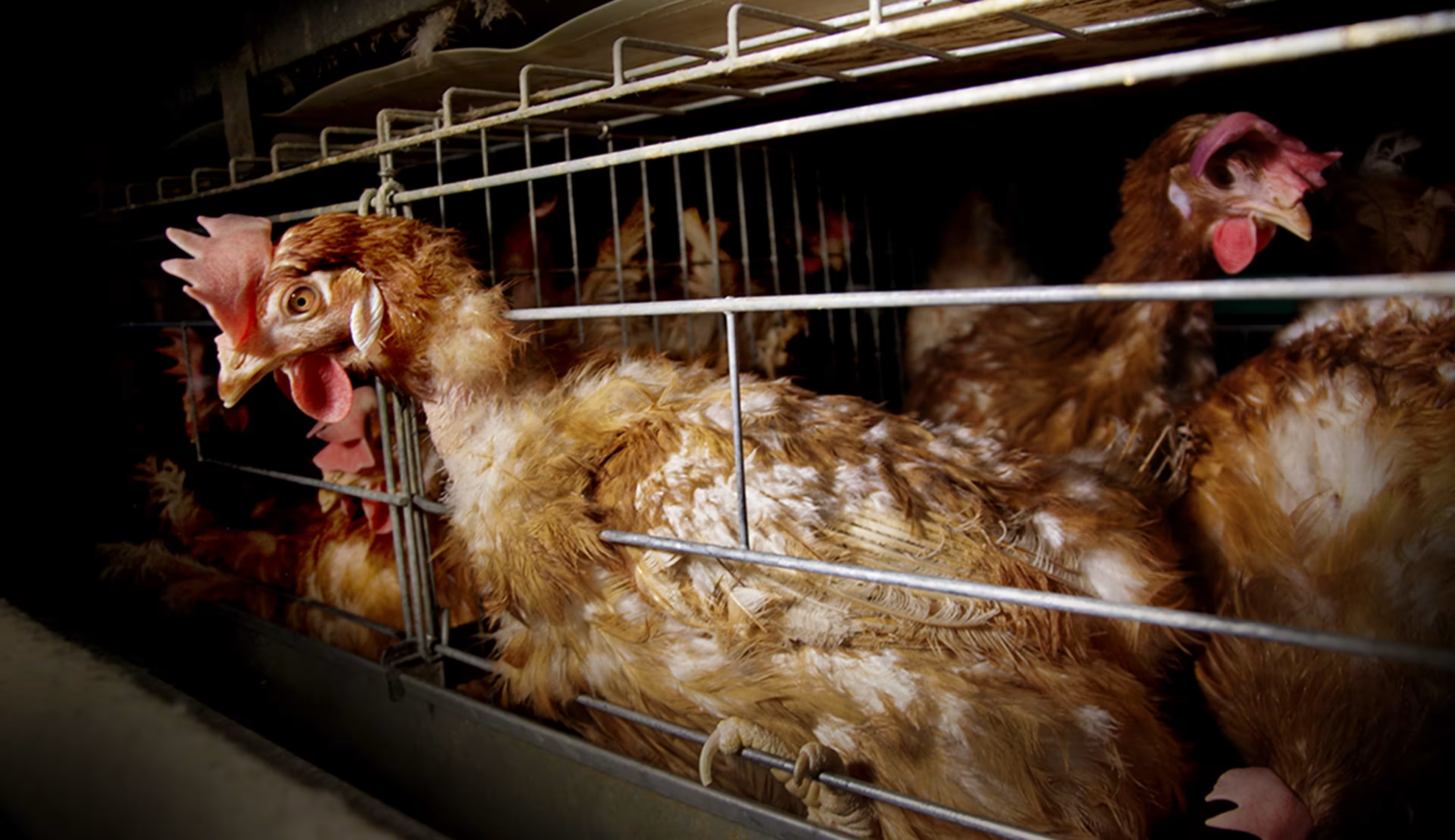
The difference between battery cages and enriched cages.
We explain the difference between the outlawed battery cage and the enriched cage that replaced it.

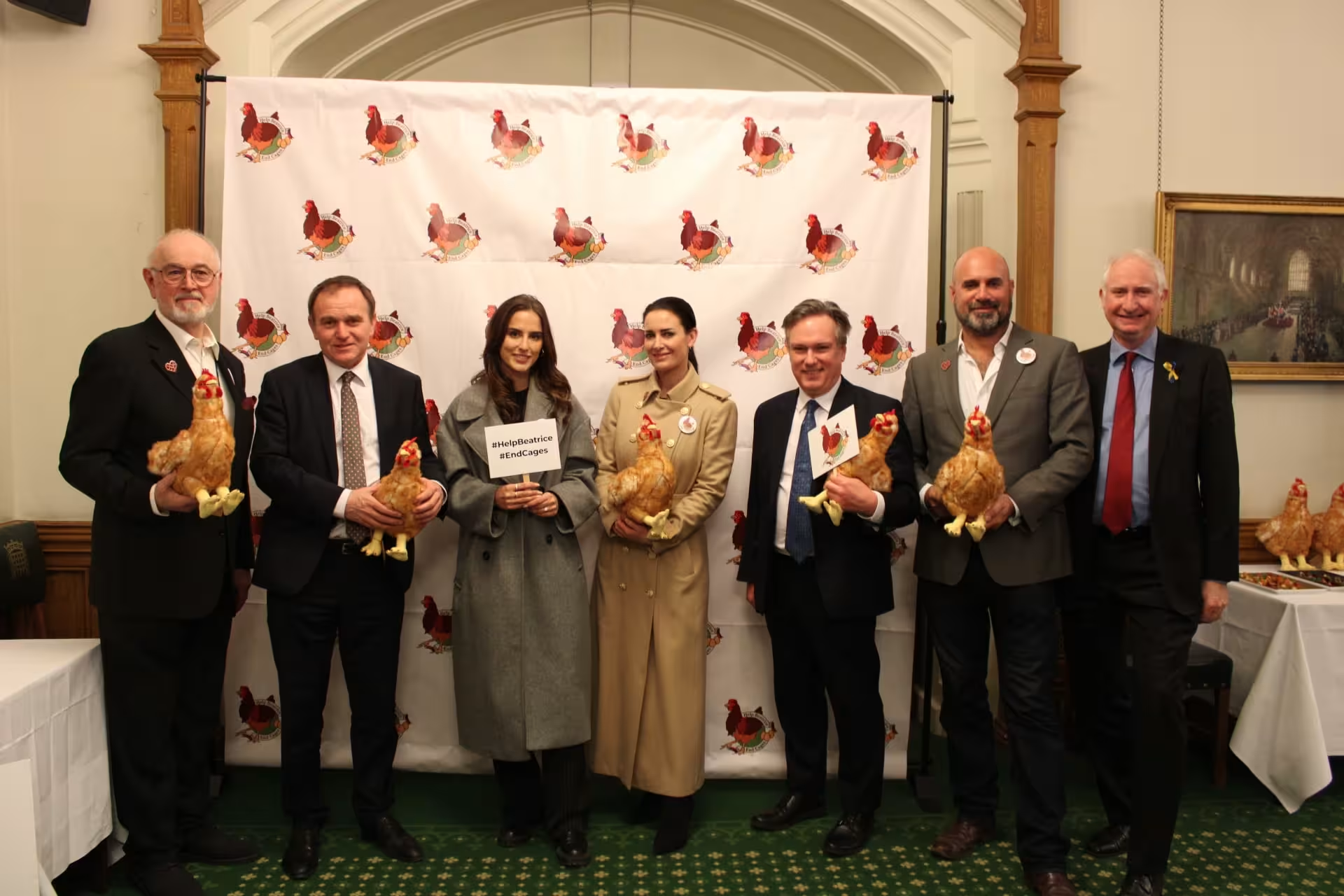
MPs, celebs, and industry call for an end to cages.
The Humane League UK, RSPCA, and the Conservative Animal Welfare Foundation hosted MPs, celebrities and food industry representatives to show widespread support for an end to cages for laying hens.

SUPPORT OUR WORK FOR ANIMALS

About The Humane League UK
We are a charity ending the abuse of animals raised for food.
Learn More