


The Humane League UK accuses NFU of pushing factory farm expansion during heatwave
We've written to Defra Minister, Dame Angela Eagle, urging stronger welfare protections.
 Matthew Chalmers


We've written to Defra Minister, Dame Angela Eagle, urging stronger welfare protections.
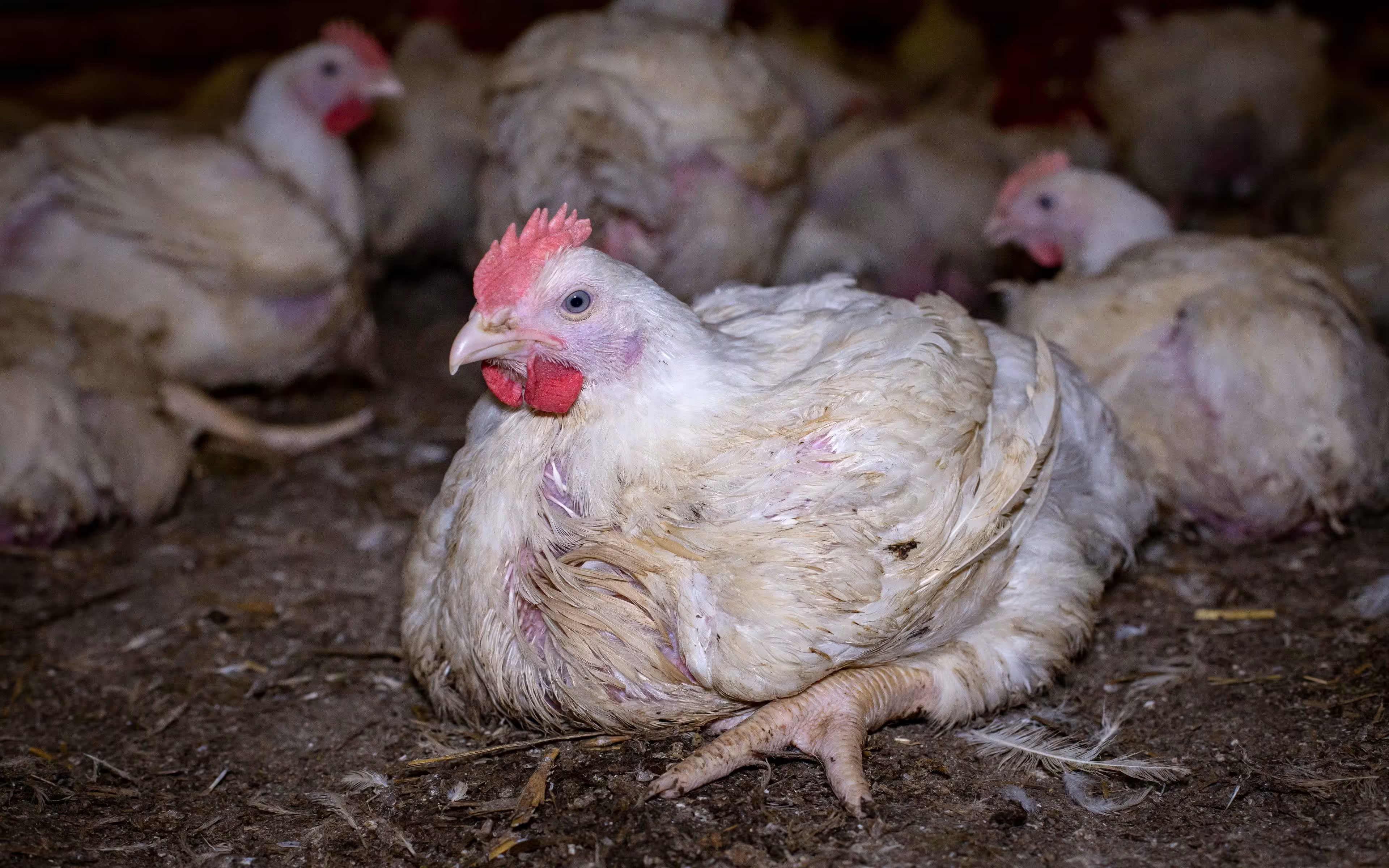


The Humane League UK has accused the National Farmers’ Union of using its “Love British Chicken” campaign to lobby for the expansion of intensive poultry farming, despite mounting concerns about animal welfare during the current heatwave.
The criticism comes after the NFU used the campaign to argue that planning rules are “holding back” the growth of the UK chicken sector.
But The Humane League UK has warned that expanding intensive chicken production would increase animal suffering, manure pollution, antibiotic use and climate emissions at a time when the industry should instead be moving away from fast-growing “Frankenchicken” breeds.
We also warned that the ongoing heatwave could lead to mass chicken deaths, as fast-growing breeds are especially vulnerable to heat stress because of the strain rapid growth places on their hearts and lungs. An estimated four million chickens died during two days of heatwave in 2022.
The Humane League UK has written to Defra minister Dame Angela Eagle, urging stronger welfare protections, including lower stocking densities and a transition to slower-growing breeds.
Claire Williams, Campaigns Manager at The Humane League UK, said: “The NFU says it wants people to ‘love British chicken’, while simultaneously lobbying to expand one of the most intensive forms of factory farming in the country. These Frankenchickens are bred to grow so unnaturally fast that hundreds of thousands die prematurely every week. But millions can die horrific deaths in heatwaves like we currently face. Britain could become a genuine world leader in chicken welfare. That would mean moving away from cruel overbreeding and endless industrial expansion, not defending it.”
Campaigners argue the NFU cannot credibly describe UK chicken welfare as “world-leading” while fast-growing breeds, known as Frankenchickens, continue to dominate the industry.
Such birds have been bred for rapid growth and suffer high rates of lameness, organ failure and burns from prolonged contact with their own excrement.
While Frankenchickens make up an estimated 90% of UK chickens raised for meat, this plummets to 45% in the Netherlands and 76% in France. Norway on the other hand, is phasing out these breeds altogether.
They also require around nine times more antibiotics than slower-growing birds, promoting the growth of antibiotic-resistant bacteria.
Chickens are the most farmed land animal in the UK, with over 1.1 billion raised and killed for meat every year.