The Humane League
  • Donate

Sign UpDonate
Our Campaigns
Latest news
Learn more
Work With Us
  • For Media
  • Events
  • Shop
Follow US
  • Facebook
  • Twitter/X
  • Instagram
  • Youtube
  • Cookie Preferences
  • Cookie Policy
  • Privacy Policy
  • Privacy policy for job applicants
  • Terms and Conditions
  • Our Partners

Contact Us

  • The Humane League UK
    The Offices
    57 Newtown Road
    Brighton
    BN3 7BA

  • [email protected]

  • 0800 014 8081

About Us

  • About Us
  • Discover
  • For Media
  • For Business
  • Our Trustees
  • Contact us
  • Our AI Commitment

Take action

  • Our Campaigns
  • Volunteer with Us
  • Work with Us
  • Gifts in Wills

Donate

  • Donate
  • Our Supporter Charter
  • Code Of Conduct
  • Fundraising Complaints Procedure
  • Fundraising FAQs

Shop

  • All Products
  • Returns & Exchanges
THL-mended-heart-icon-padding-01

Be a part of the change. Take action #ForTheAnimals.

Take action
2025 Recommended charity
Registered with the Fundraising Regulator
  • Facebook icon white
  • Twitter icon white
  • ic-instagram-white-normal 2x.png?h=250
  • Youtube icon white
  • Cookie Policy
  • Privacy Policy
  • Privacy policy for job applicants
  • Terms and Conditions
  • Our Partners

Registered charity no. 1177926 | The Humane League. All rights reserved.

Unless otherwise noted all imagery of factory farms on this site is representative of typical conditions.
Factory farming

What is bird flu and how is it linked to chicken farming?

Bird flu may not be deadly yet, but it could be the source of the next pandemic.

Matthew Chalmers
Matthew Chalmers
Feb 10, 2022
Share
twitter-white-icontwitter-white-icon
fb-white-iconfb-white-icon
linkedin-white-iconlinkedin-white-icon
email-white-iconemail-white-icon

Bird flu may not be deadly yet, but it could be the source of the next pandemic.

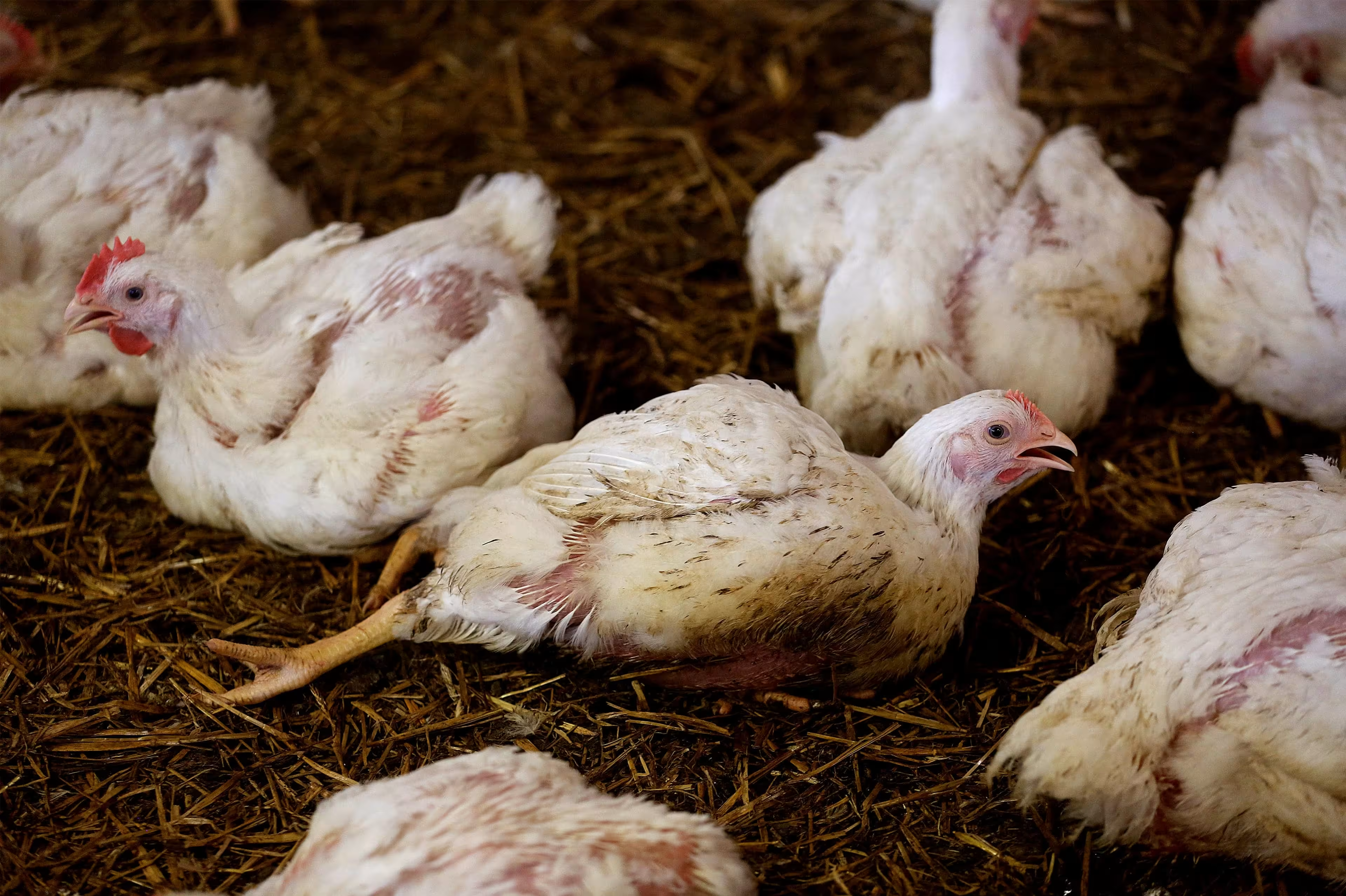
Chickens suffering on factory farm
Andrew Skowron / Open Cages
Share
twitter-white-icontwitter-white-icon
fb-white-iconfb-white-icon
linkedin-white-iconlinkedin-white-icon
email-white-iconemail-white-icon
twitter-icontwitter-icon
fb-iconfb-icon
linkedin-iconlinkedin-icon
email-iconemail-icon

Avian influenza or bird flu has been on the rise in the UK and mass cullings have made the headlines, but how serious is this problem?

What is the bird flu outbreak?

Since December 2021 the UK has been plagued by an outbreak of bird flu, which the Animal and Plant Health Agency has described as the country’s largest ever.

This has been disastrous both for farmers and for the nation’s birds.

The government response has been swift and severe. The first case of avian influenza in this most recent outbreak was detected in Lincolnshire on 11th December 2021. Less than one month later one million chickens had been culled. Animal charity Open Cages published footage of mountains of dead chickens being dumped by diggers into pits.

The disease has spread and outbreaks have been numerous, with some 76 separate outbreaks recorded at the time of writing. The virus has been found in chickens, Canada geese, swans and now seagulls.

If the virus fails to kill the farmed birds then government agencies are sure to, normally culling the animals with CO2 gas.

Why is bird flu dangerous?

More worryingly, the virus has also spread to humans.

It must be emphasised that at present it is believed that the likelihood of a bird giving a human bird flu, or an infected person passing it on to another person, is very low.

However, avian influenza can survive on manure on peoples’ shoes for months at a time.

Yet as we have seen with Coronavirus, the danger lies not so much in what bird flu is now, but in what it could mutate into.

Could bird flu be the next pandemic?

The Spanish Influenza outbreak of 1918 is thought to have killed at least 50 million people worldwide and very likely originated in birds - although whether it first developed in wild or domestic birds is unknown.

The Covid 19 pandemic also likely originated in animals. All the while, new strains of bird flu are developing in the cramped and dirty confines of chicken sheds and factory farms across the globe.

The world's 33 billion chickens may well be the source of the next pandemic, and current outbreaks of avian influenza prove that even strong biosecurity measures can fail to prevent diseases leaking out of animal agriculture.

How can we stop avian flu?

We must come together as a society and a species and urgently ask ourselves if confining this amount of stressed and suffering animals is worth it given the risk it poses to them and ourselves.

Intensive animal agriculture endangers our health contributing to the emergence of zoonotic disease and antibiotic resistant bacteria (which now kill more people than malaria or AIDS), it pollutes our environment and brutalises animals and slaughterhouse workers.

Plant-based foods provide a better option for both human civilisation and the countless animals who live and cruelly die at our mercy.

Birds, most of whom were destined for slaughter anyway, are the victims for now. Next time it could be us.

More Like This

Chickens on Farm Image
Factory farming

Covid: We need to evaluate our relationship with animals

If there were ever a time to re-evaluate our relationship with animals, it is now.

Vicky Bond
Vicky Bond
May 25, 2020