


Government announces support for Better Chicken Commitment
By announcing financial support for farmers to implement the Better Chicken Commitment, Defra has demonstrated the direction that the Government wants to see animal welfare go in.
 Jamie Gittins


By announcing financial support for farmers to implement the Better Chicken Commitment, Defra has demonstrated the direction that the Government wants to see animal welfare go in.
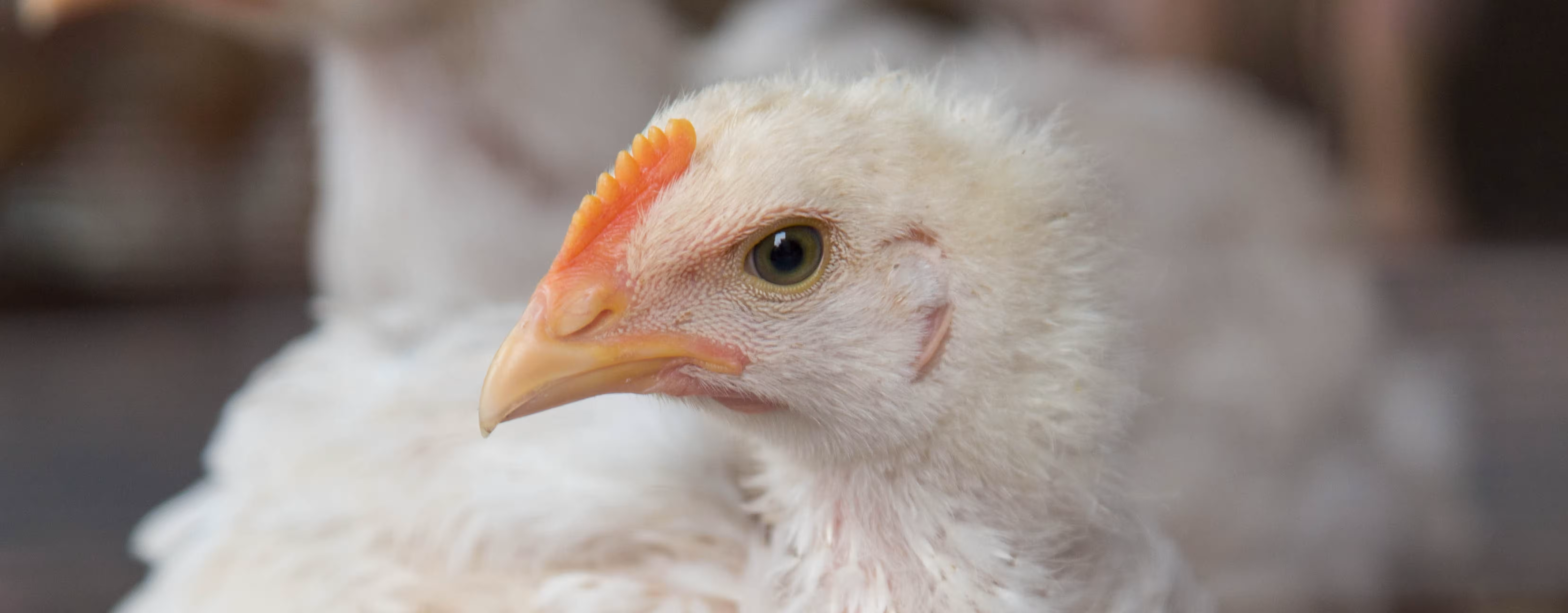


In a groundbreaking milestone, Defra has stated that implementing the Better Chicken Commitment (BCC) is a priority in its new Animal Health and Welfare Pathway, a scheme that will offer financial support to farmers to improve the health and welfare of their animals. This is a significant move, as it represents an acknowledgement of the problems in the current system and an endorsement of the solutions offered by the BCC.
The inclusion of the BCC as one of Defra’s priorities in the Animal Health and Welfare Pathway sends a strong signal of support for the commitment, which includes requirements for slower-growing breeds, lower stocking densities, and improved housing conditions.
The Pathway is designed to support farmers to improve the health and welfare of their animals through grants and payments based on the actions that they take. As an important part of Defra’s future plan for farming, the priorities for the plan indicate where the Government wants to see welfare standards heading.
Since its creation by leading animal protection organisations including The Humane League, the RSPCA, and Compassion in World Farming, the BCC has seen commitments from many leading companies including Nestlé, KFC, Kraft-Heinz, and Sodexo. However, the supermarket sector is noticeably lagging behind on the important issue of improving chicken welfare. To date, Waitrose and M&S are the only supermarkets to have signed up to the BCC.
Given that the Government is willing to help fund the transition to the BCC, it is now even more clear that the supermarkets are avoiding their responsibility to improve the welfare of the chickens they sell. How can supermarkets hold back from investing their own profits in improving chicken welfare, while the taxpayer helps to fund the transition to the BCC? If they are to retain public trust in their standards, supermarkets must join the other food industry sectors and commit to the BCC.
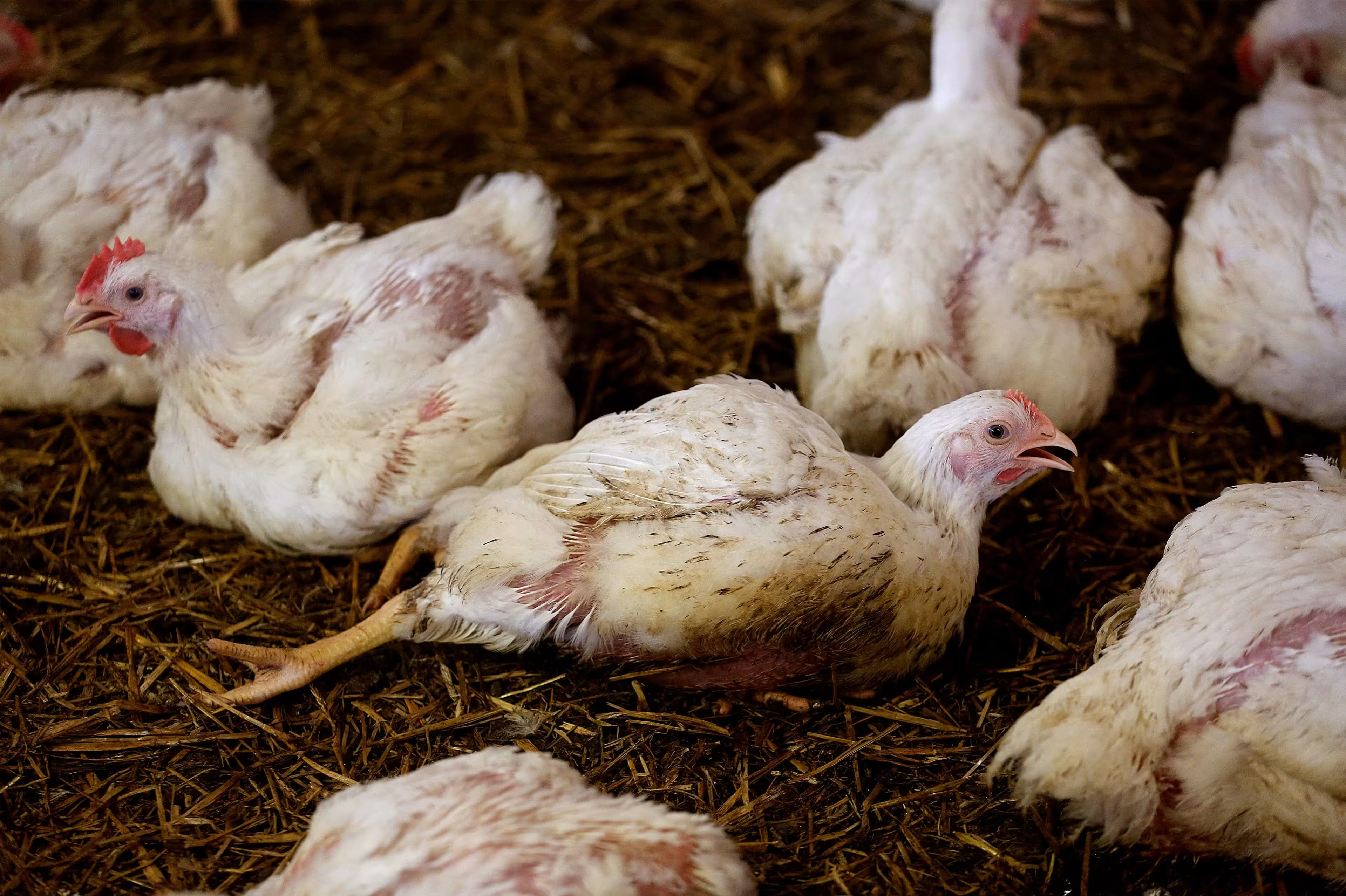
While the inclusion of the BCC as a priority in the Animal Health and Welfare Pathway is a welcome signal, it should not distract from the fact that legislation is ultimately the strongest way that the Government can protect animal welfare. The support from the Government for the BCC should not be a substitute for strong legislation on chicken welfare, a point that is all the more salient at the moment amidst concerning Government backtracking on a planned fur and foie gras ban. This is why we are challenging the Government in court for allowing the use of fast-growing breeds of chicken, whose unnatural growth rates make them prone to painful conditions.
This latest victory for the BCC and chickens is a result of the relentless work of our supporters up and down the country. Together, we have raised awareness of chicken welfare and challenged industry and Government to take action. As we continue to fight for the animals, your support is valued more than ever.
More Like This

What is the Better Chicken Commitment?
What does better chicken welfare look like and why do we need the Better Chicken Commitment.

What is bird flu and how is it linked to chicken farming?
Bird flu may not be deadly yet, but it could be the source of the next pandemic.
