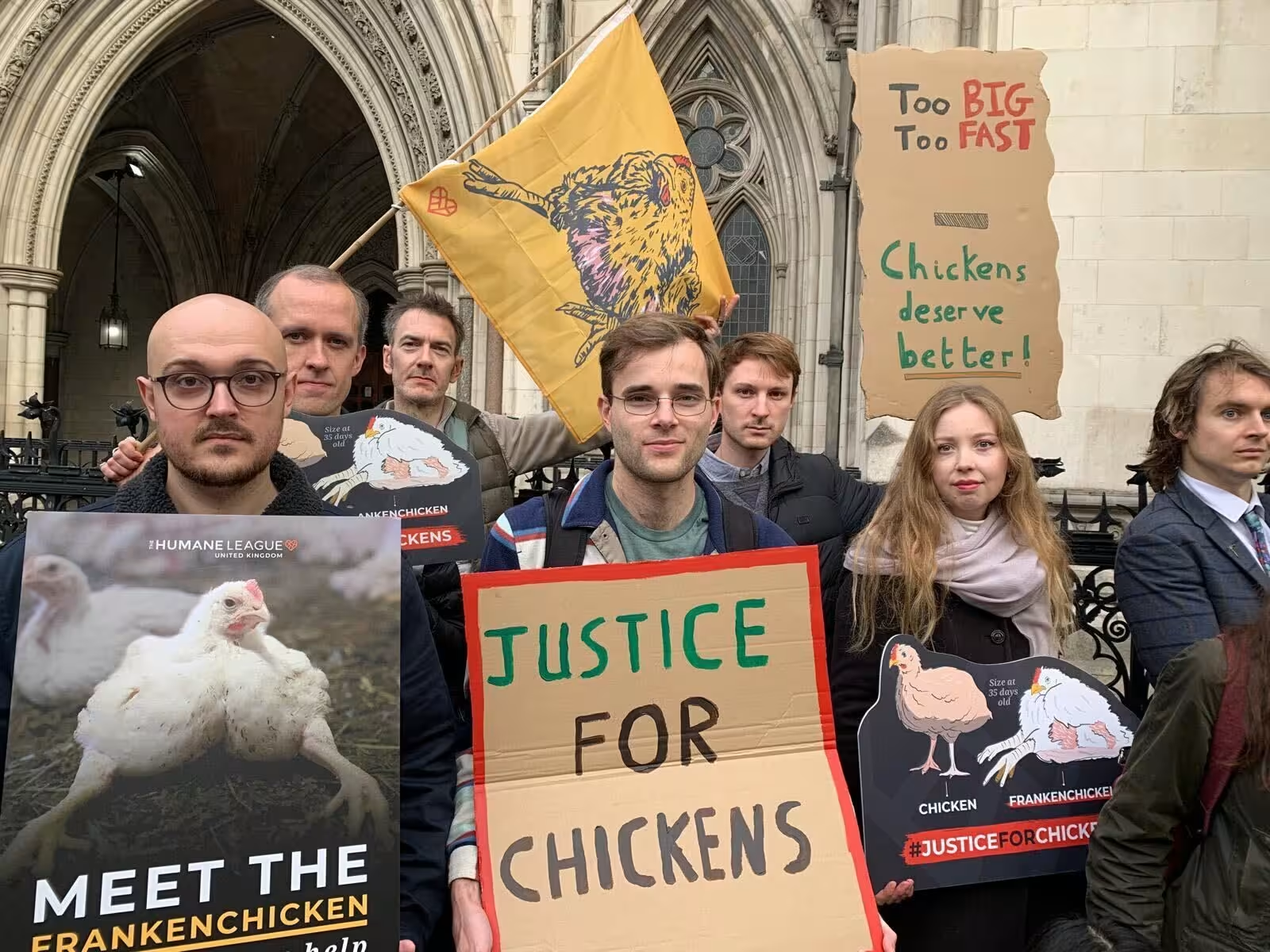
The letters were sent after a legal challenge launched by THL UK ruled that farming animals who suffer due to their genes is unlawful - regardless of profitability.
The Court of Appeal’s ruling also said that farmers have a duty to inform themselves about the welfare problems affecting the animals they keep, including fast-growing chickens.
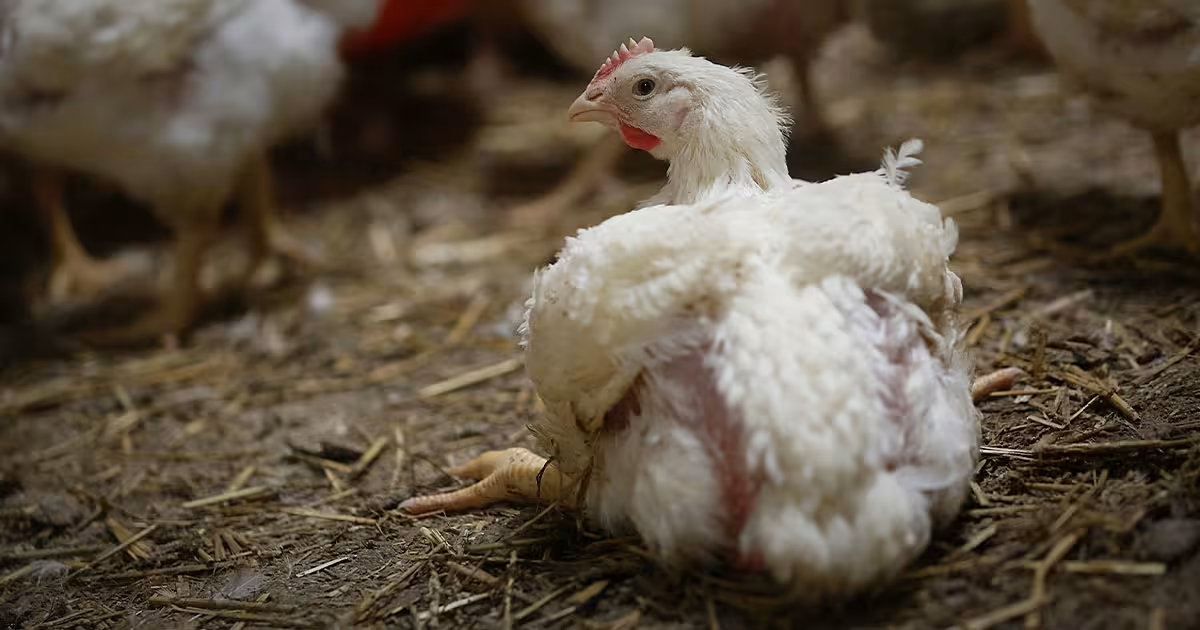
Frankenchickens account for over 9 in 10 chickens raised for their meat in the UK. They are bred to grow extremely large, extremely quickly, growing from chick to slaughter weight in just 35 days on average. This unnatural growth rate maximises profit, but has severe welfare consequences including muscle diseases, bone deformities and burns from lying in their own waste.
This suffering is unavoidable as it comes as a consequence of the extreme growth, which is built into their very DNA. Conditions are so bad that approximately half a million chickens die every week on UK farms before even reaching slaughter. Frankenchickens also require up to nine times more antibiotics than slower-growing breeds, contributing to the threat of antibiotic-resistant bacteria.
THL UK has now placed evidence in producers’ hands by sending these letters, which contains the full scientific evidence showing that Frankenchickens suffer regardless of environment, and therefore could be considered unlawful.
The British Poultry Council (BPC) is already coming to the defence of their industry, saying that there is no ‘basis of concern’ for farmers given the result of judicial review, hiding behind the fact that Defra, the Government’s farming body, is the competent authority. They accuse us of spreading misinformation, when we are the ones relying on the science.
But Defra is still bound by the law, as are farmers. When the scientific evidence shows that Frankenhickens have suffering coded into their DNA, and there’s legislation designed to prevent exactly that, this is a cause for grave concern - it is evidence of potential illegality. The British Poultry Council should not shield their members from the seriousness of this situation.
Fast-growing breeds of chicken like the Cobb 500, Hubbard Flex, and Ross 308 should be phased out or chicken producers could find themselves in a magistrates court over animal welfare breaches.
The 4 largest poultry producers in the UK have also received letters. These are Avara, Cranswick, Moy park and 2 Sisters, the latter recently reporting an increase in turnover of £1.6 billion last financial year.
Regardless of what the BPC say, these are the cold hard facts. The system doesn't work for farmers, it doesn't work for consumers, and it certainly doesn't work for the millions of chickens suffering every single day. We simply won’t rest until we see an end to Frankenchickens.


 Matthew Chalmers