


What are the different breeds of chicken?
Some chicken breeds make bizarre and fashionable companions while others are cruelly designed to maximise agricultural profits.
 Matthew Chalmers


Some chicken breeds make bizarre and fashionable companions while others are cruelly designed to maximise agricultural profits.
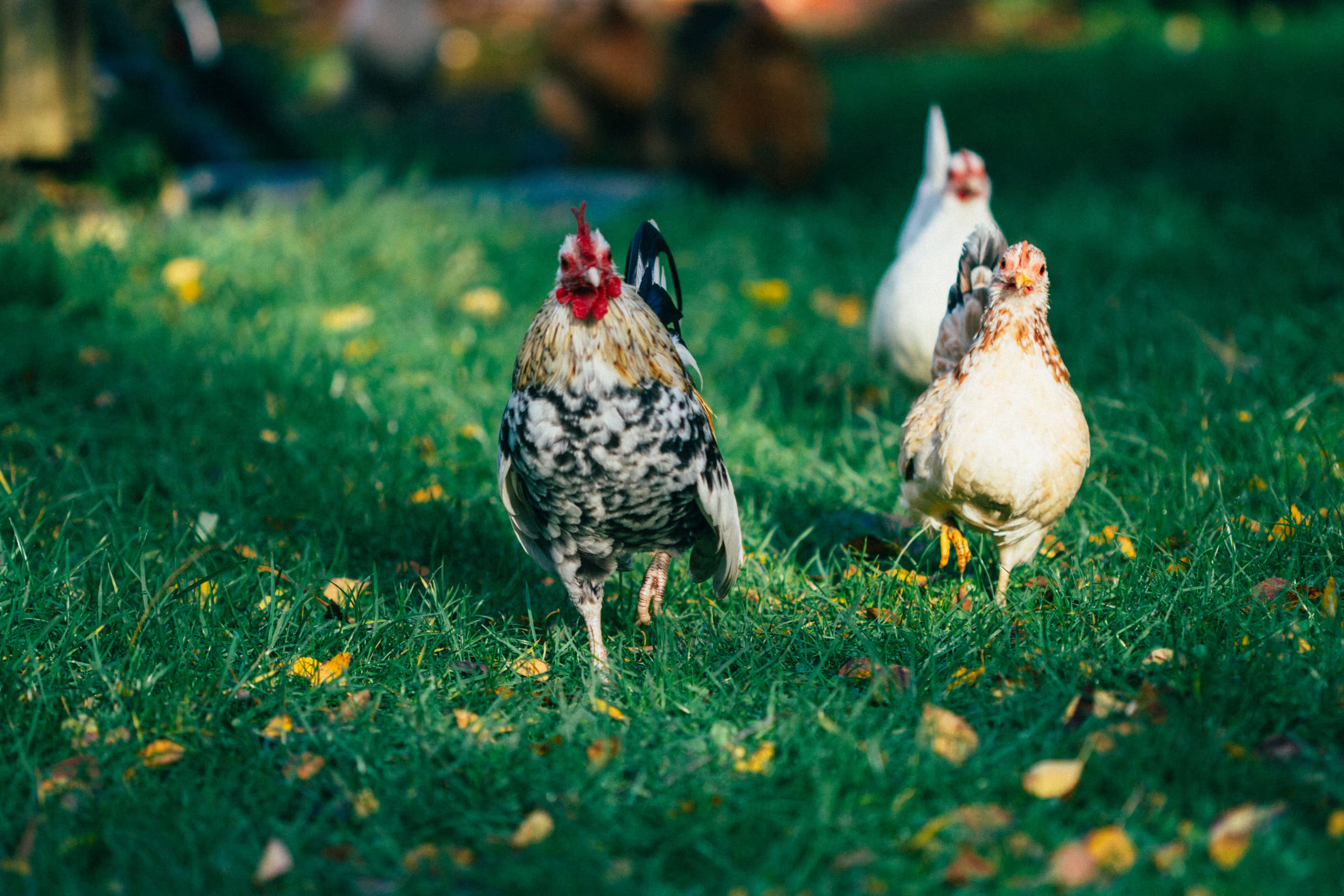


Chickens are wonderful animals who appear in all different shapes and sizes, yet sadly the most common chicken breeds live lives of suffering and fear.
Nobody knows what the true number of chicken breeds are, as there are so many. Certainly there are hundreds of breeds, and their diversity represents the millenia-long relationship between people and chickens across every continent bar Antarctica.
To understand why there is such a stunning diversity of chicken breeds, we need to go back to the beginning and chart the history of these amazing animals.
Red jungle fowl
Red jungle fowl are the ancestors of the modern chicken. They were first domesticated three thousand five hundred years ago in what is now Thailand. This makes them one of the most recent animal species to be domesticated, and the birds may have initially been attracted to human settlements by early rice crops. Much like how the ancestors of cats and dogs were drawn to human camps to gnaw on scraps of food, chickens came to snack on rice!
Red jungle fowl are quite different to many modern chicken breeds. For example, they only lay 12 eggs a year, which is far less than modern laying hens who have been bred to lay around 300 eggs per year. Although they often interbreed with free-ranging domestic chickens, red jungle fowl are still widespread across most of southern and southeast Asia, from India to Indonesia.

When people first domesticated chickens they may have been used as exotic pets, or for cockfighting. As they spread around the world, it took an average of five hundred years after their arrival in a new location for the chicken to become food. In Iron Age Britain, before the Roman conquest, chickens were even considered sacred. It just goes to show that chickens have captured the imagination and respect of people in the past, and that their exploited and abused status in today’s factory farms is not inevitable.
Pure breeds of chicken
‘Pure breeds’ are pedigree chickens, whose breed standards are regulated and accredited by national organisations, in the same way as pedigree cats or dogs.
The most fantastic and bizarre chickens are pure breeds, often ornamental birds bred for exhibitions, where they compete with other chickens like in dog shows. These pedigree chickens sometimes have eccentric appearances like the punk-rock silkies and cochins.
These exotic animals are by no means new creations - silkies were possibly described by Marco Polo in China in the 1200s, and silkie meat, which is black, is considered a delicacy in parts of East Asia. Silkie meat was also believed to have curative powers in Chinese medicine from the seventh century onwards. Indeed, their furry appearance led to whacky myths being peddled by the early Dutch merchants who brought them to Europe, who claimed silkies were the offspring of chickens and rabbits!
The UK has hosted a community of pure-breed chicken lovers for quite some time - the national Poultry Club was founded in 1877. Some pure breeds of chicken can also be effective layers, or were used as commercial birds in the past. These include the Rhode Island Reds and Sussex breeds, who lay lots of eggs and who were the principle chickens used for meat in the UK during the Second World War.
Bantams
Bantams are miniature chickens. True bantams are chicken breeds who only exist as a small version, but you can get bantam versions of larger chicken breeds too. The name ‘bantam’ comes from the seaport of Banten/Bantam in Indonesia, where European sailors encountered small chickens which they found useful for transporting in their ships.
The vast majority of the planet’s chickens are not pets or wild birds but are kept on farms for their meat or eggs. In fact, humans exploit an extraordinary number of these animals. There are ten times more chickens than the next most populous bird species, and around 50 billion chickens are slaughtered for food each year - that’s 136 million chickens a day, 94,000 a minute, 1,500 each second.
The exploitation of chickens represents suffering on an unparalleled scale among land animals.
For every glorious ornamental chicken, strutting comfortably around someone’s garden, there are thousands of others crammed in cages for their eggs, struggling under their weight in meat farms, or painfully dying in slaughterhouses by gas, electrocution or knife.
Broiler chickens
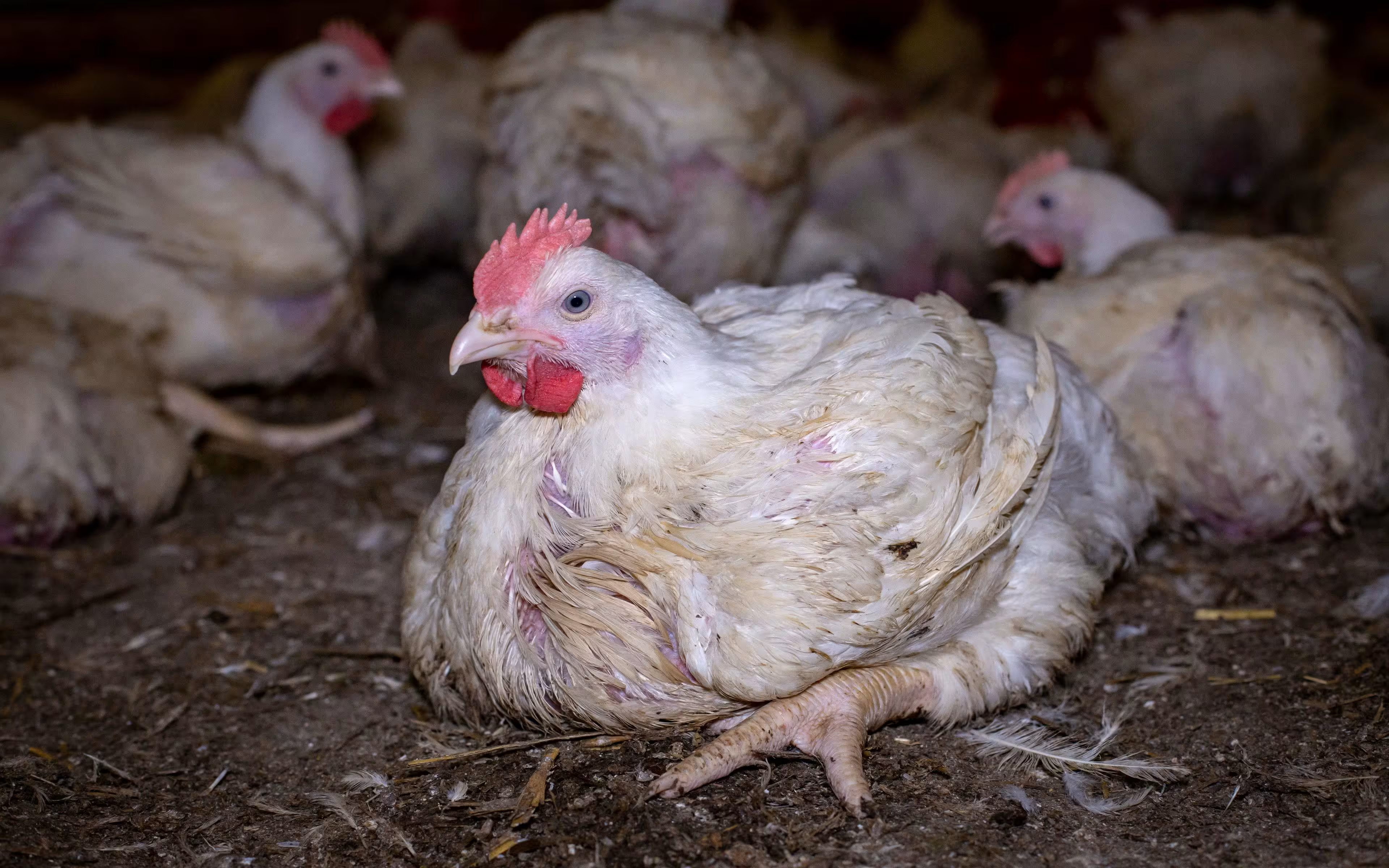
Meat chickens, known as ‘broilers’ in the industry, have been selectively bred over many generations to create as much money as possible for farmers and corporations. This means they have been bred to grow unnaturally fast, so they can reach slaughter weight faster, and others can swiftly replace them and go through the same cycle.
These animals have been pushed to extremes of rapid growth and weight gain. Dubbed ‘Frankenchickens’, the three most popular breeds are the Cobb 500, Ross 308 and the Hubbard Flex. Even their strange, numbered, branded names indicate the way these animals are seen by their creators - as machines in a factory line, as products in a store. In reality, they are thinking, feeling individuals, who unfortunately endure lives of intense suffering.
Frankenchickens make up the overwhelming majority (90%) of meat chickens in the UK. Fast growth causes numerous painful and debilitating health problems among these birds. These include ascites or ‘water belly’, where a bird’s abdominal cavity fills up with liquid and is one of the leading causes of mortality in fast-growing chicken breeds.

There are also muscle disorders, like green muscle and white striping disease, where the bird's muscles struggle to keep up with the demands of fast growth, leading to dying cells (necrosis) or the replacement of protein with streaks of fat.
On top of this, their high blood pressure puts a lot of strain on their organs. Heart failure is common, as are breathing problems and pressure on the lungs.
The enormous weight of fast-growing chicken breeds also leads to lameness, where the birds’ legs cease to properly function, becoming very painful. Some birds will become completely immobile, and unable to reach food or water. These may be spotted by farmers and prematurely culled, if they are lucky. If not, they may die of hunger or thirst.
How are broiler chickens raised?
Broiler chickens may not be stuck in cages like many egg-laying hens, but they are still given very little space. Sheds may contain tens of thousands of animals. In contrast, red jungle fowl live in small groups of up to ten birds in the wild. The fact that these animals are forced into living with hundreds of times more individuals than their natural preference is a source of substantial stress.
The UK legal stocking density for broiler chickens is 33kg per metre squared, which can go up to 39kg per metre squared if the farmer can produce documents showing the surfaces the chickens will occupy, the floor and litter plan, where feed and water dispensers are located, and provides better ventilation and air quality targets. If the average broiler chicken weighs around 2.2 kg when slaughtered, then farms operating at the highest stocking densities will have an average of seventeen chickens per square metre before slaughter. This is intense and unacceptable overcrowding.
Burns
The sheer number of birds produce a huge amount of waste. Chicken faeces are rich with ammonia, a gas which can cause irritation in the eyes and lungs. However, because many birds find walking difficult and painful, they will lie in their waste for extended periods. The ammonia in the waste will burn their skin, causing painful hock burns and lesions.
Heat
While producers operating at stocking densities above 33kg per metre squared are supposed to provide adequate ventilation, this has repeatedly been proved not to be the case. Millions of birds roasted alive inside their sheds as temperatures rose past 40C in the UK in July 2022. This was also not unprecedented - thousands of birds had also died from heat stress in 2019.
Fast growth increases body heat production, making the animals more susceptible to heat stress which makes the birds’ already heightened blood pressure increase. The combination of heightened blood pressure, particularly around the lungs, and high body temperatures cause heart failure, hyperventilation, confusion, dizziness, diarrhoea and death.
Slaughter
About 70% UK broiler chickens are killed with ‘controlled atmospheric stunning’ - meaning they are gassed until unconcious with either carbon dioxide or a mixture of other gases. While this method is still potentially cruel and frightening for the animals, it is preferable to the alternatives. Other birds are either killed with electrical waterbath stunning, or receive no stun at all and have their throats cut while conscious, in the case of a minority of halal slaughterhouses (although 87% of UK halal meat came from animals stunned before slaughter) and all kosher slaughterhouses.
Non-stun slaughter is cruel as the animals are fully conscious as they die due to blood loss, which can take 20 seconds or more. Electrical waterbath stunning is also very cruel for chickens, as they are shackled upside down which puts pressure on their organs. This will be even more uncomfortable for fast-growing breeds whose organs are under a lot of pressure. The animals are also conscious and afraid before their head is dipped in electrified water. This should stun them, but sometimes if their head is not fully submerged or they arch their necks away from the water, a bird will be conscious when his or her neck is cut.
Egg-laying hens
Red jungle fowl may lay 12 eggs a year, but a modern commercial layer hen will lay twenty-five times as many, around 300 eggs per year. Just as broiler breeds have been selected to produce the most meat, egg-laying birds have been selected to produce the most eggs.
Commercial egg-laying hen breeds in the UK are varied but tend to be brown hens. Popular breeds include Bovans Brown, ISA Brown, Lohmann Brown and Novogen.
How are egg-laying hens raised?
Cages
Globally, the majority of laying hens are still kept in barren battery cages.
This is not the case in the UK, where 86% of hens are cage free. However, the remaining 14% are kept in so-called ‘enriched cages’. These cages are marginally bigger than barren battery cages, which were banned in the EU in 2012, and contain a few enrichments like perches and roosting areas.
These cages are still incredibly small - where a barren battery cage gives a hen an A4 paper-sized area to live in, an enriched cage adds a post-it note of space to that. They are still so small that they restrict and frustrate a large range of natural behaviours, which breeders have not managed to eliminate. These include wing stretching and flapping, and dust bathing., While they may have roosting areas and perches, access to these are limited and competition with other birds is fierce.

Cage-free systems range from crowded barns with poor welfare to higher-welfare indoor systems and free-ranging organic birds. While it may not solve all welfare problems, there is no question that being outside of a cage is better for hens.
Osteoporosis
A major welfare problem for egg-laying hens is osteoporosis, or brittle bones. These hens lay so many eggs that it deprives them of calcium, phosphorus and vitamin D and so weakens their bone development. This leads to brittle bones which can spontaneously fracture. Birds who have more exercise, and are not stuck in cages, actually develop stronger bones through sustained movement.
Slaughter
When hens stop producing eggs, or producing them in amounts considered commercially viable, they are deemed ‘spent’ and taken to be killed in a slaughterhouse by the same methods as broiler chickens are killed. Their bodies will be used as a source of cheap meat, commonly in pet food.
Conclusion
Chickens come in many varieties, colours and forms. Their history is rich - they have gone from jungle birds to sacred animals, exotic pets, and cheap sources of food. Even today they are the fourth most numerous companion animal in the UK.
Currently the vast majority of the planet’s billions of farmed chickens have short and crowded lives of suffering which end in abattoirs. But this doesn’t have to be the way.
If you want to help fight for chickens, you can sign up to our emails to receive quick and easy online actions you can take against animal cruelty.
More Like This
Is Your Supermarket Selling You Broiler Chickens And What Are They?
Broiler chickens are chickens raised for meat. On factory farms, they're usually slaughtered when they're just 5-6 weeks old.


Report: Supermarkets fail to cut pain for chickens.
Around 300 million chickens raised to Better Chicken Commitment (BCC) standards will experience one third the severe pain of conventional birds.
