


Why the UK's massive appetite for chicken is harming us all
Chicken isn’t the eco-friendly food that many believe it to be.


Chicken isn’t the eco-friendly food that many believe it to be.
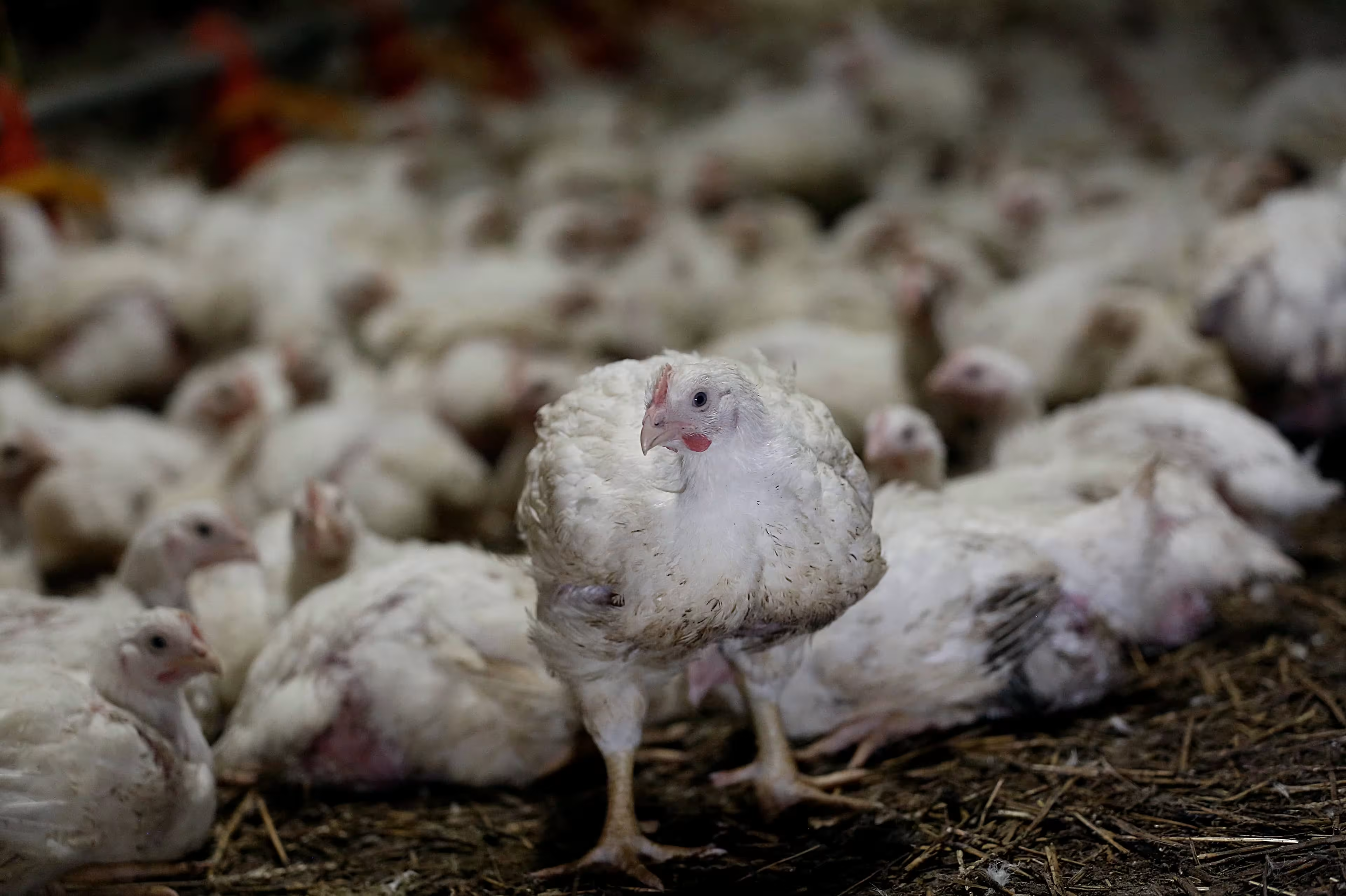


Chicken isn’t the eco-friendly food that many believe it to be.
Yes, compared with beef and lamb, chicken has a lower carbon footprint. Chickens have been bred to grow very quickly, they require less feed than larger farmed animals, and they don't produce methane in the same way that cows and sheep do.
But positioning chicken as the ‘good meat’ hides some pretty alarming details about chicken and the environment:
- We eat a lot of chicken, far more than beef or lamb.
- Chicken is much more carbon intensive than plant foods.
- Chicken is contributing to water pollution and deforestation.
- The chicken industry is expanding rapidly.
The chicken industry has benefitted from comparisons made with red meat. But is it really the environmentally-friendly option many believe it to be?
We eat a lot of chicken
Let's start with the scale of our appetite for chicken.
Chicken is now the most popular meat in the UK. We eat more chicken than we do beef, lamb or pork, and demand has grown substantially over recent decades. In 2024, over 1.2 billion chickens were slaughtered for meat in the UK, with approximately 1.8 million tonnes of chicken meat produced.
That's an extraordinary number of animals — and an extraordinary amount of meat.

If we look at the greenhouse gas emissions of chicken compared to beef, it’s certainly an improvement. But compare it to plant foods like grains and pulses and the picture starts to look very different.
Chicken creates twice as many greenhouse gas emissions as grains for each gram of protein produced and over six times that of pulses. It’s a lot ‘better’ than beef or lamb, but considerably worse than plant foods.

So with chicken, we’re eating a carbon-expensive food at a huge scale.
Not great for the environment.
Chicken is a water pollution problem
Climate change isn't the only environmental problem created by chicken.
Chickens produce a lot of manure. That manure contains nutrients such as nitrogen and phosphorus and when too much enters rivers and waterways, they can cause serious problems.
One of the clearest examples can be found around the River Wye. More than 50 million chickens are now estimated to be raised in the area at any one time.
The Government’s Environment Agency estimates that around 3,000 tonnes of surplus phosphorus are added to the soils of the Wye catchment each year, with animal manure responsible for the majority of that surplus.
All this excess manure is contributing to toxic algal blooms which harm wildlife.
This is devastating for the local ecology as key species like Atlantic salmon and white clawed crayfish decline. This is to say nothing of the potential health implications for people swimming in the river or walking their dogs in the area.
The River Wye should serve as a warning to the rest of the UK for what can happen when intensive farming grows beyond what our waterways can hold.
Chicken is destroying the Amazon
The environmental impact of chicken farming doesn't stop at the UK's borders.
Chickens need to be fed and one of the major ingredients in poultry feed is soy. That soy has to be grown somewhere and investigations have linked soy used in the supply chains of chicken sold in British supermarkets and fast-food outlets to land associated with deforestation in Brazil.
This is an often-hidden part of the environmental impact of chicken.
And while cow farming remains the biggest direct driver of Amazon deforestation, growing demand for soy is also contributing to pressure on forests and other ecosystems in Brazil.
The more chicken we produce, the more feed we need. And that means the environmental footprint of British chicken can stretch far beyond Britain.
The chicken industry wants to get even bigger
Perhaps the most concerning part of this story is that the chicken industry is actively planning for more growth.
The chicken industry has recently put forward plans to grow the poultry sector and wants the Government to consider chicken as part of the UK’s “critical food infrastructure”. We can already see signs of this growth in our towns and cities.

Chicken shops have become a familiar feature of British high streets, while supermarkets, restaurants and fast-food chains continue to compete to sell us more chicken in more forms.
KFC alone has announced plans for 500 new outlets, while newer fried-chicken chains are also expanding rapidly.
More chicken on our high streets. More chicken on supermarket shelves. More intensive farms producing more chickens.
The chicken industry isn't simply waiting for us to decide what to eat. It’s investing in a future in which we eat more chicken.
And if that expansion happens in areas already struggling with environmental issues, or relies on feed linked to deforestation overseas, the environmental consequences become even more serious.
Eating more plants and less meat
If we're serious about reducing the environmental impact of our diets, we shouldn't only ask which meat is the least damaging. We should also ask why we're consuming so much meat in the first place.
More than half of the UK public agree that we should try to eat less meat. Meanwhile the UN is calling for countries to shift towards more plant-rich diets to reduce greenhouse gas emissions.
And eating less meat doesn't have to mean giving up the foods we enjoy.
For someone who currently eats chicken every day, replacing just a few meals each week with a plant-based alternative could make a meaningful difference.
A chicken curry can become a chickpea curry. Chicken burgers can be replaced with plant-based ones. Vegetables, grains and pulses can become the main part of a meal rather than something on the side.
And unlike simply swapping beef for chicken, eating more plant-based foods tackles the problem at its source: fewer animals need to be produced in the first place.
We don't need to replace one meat-heavy diet with another. We need to eat more plants and less meat.
The Humane League UK is campaigning for an end to cruelly-bred Frankenchickens. Add your voice by signing the petition.
More Like This

What's a Frankenchicken and how can you help?
Frankenchickens are unnaturally large birds who have been bred to grow at an accelerated rate, with serious consequences for their welfare.

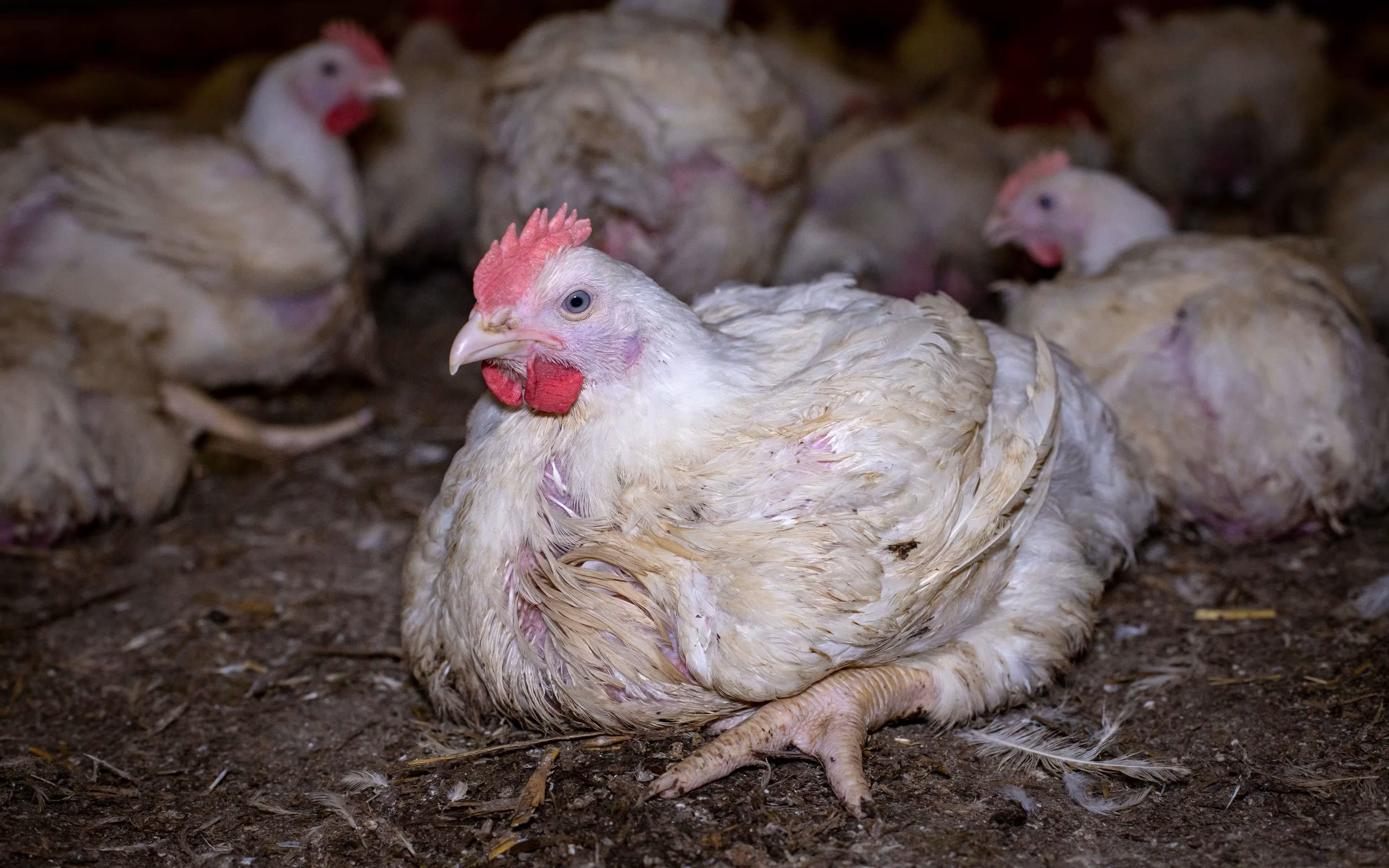
The honest truth about chicken slaughter in the UK
Over a billion chickens are killed every year in the UK. We explore whether these animals are slaughtered humanely.
