


The honest truth about chicken slaughter in the UK
Over a billion chickens are killed every year in the UK. We explore whether these animals are slaughtered humanely.
 Tim Ridgway


Over a billion chickens are killed every year in the UK. We explore whether these animals are slaughtered humanely.
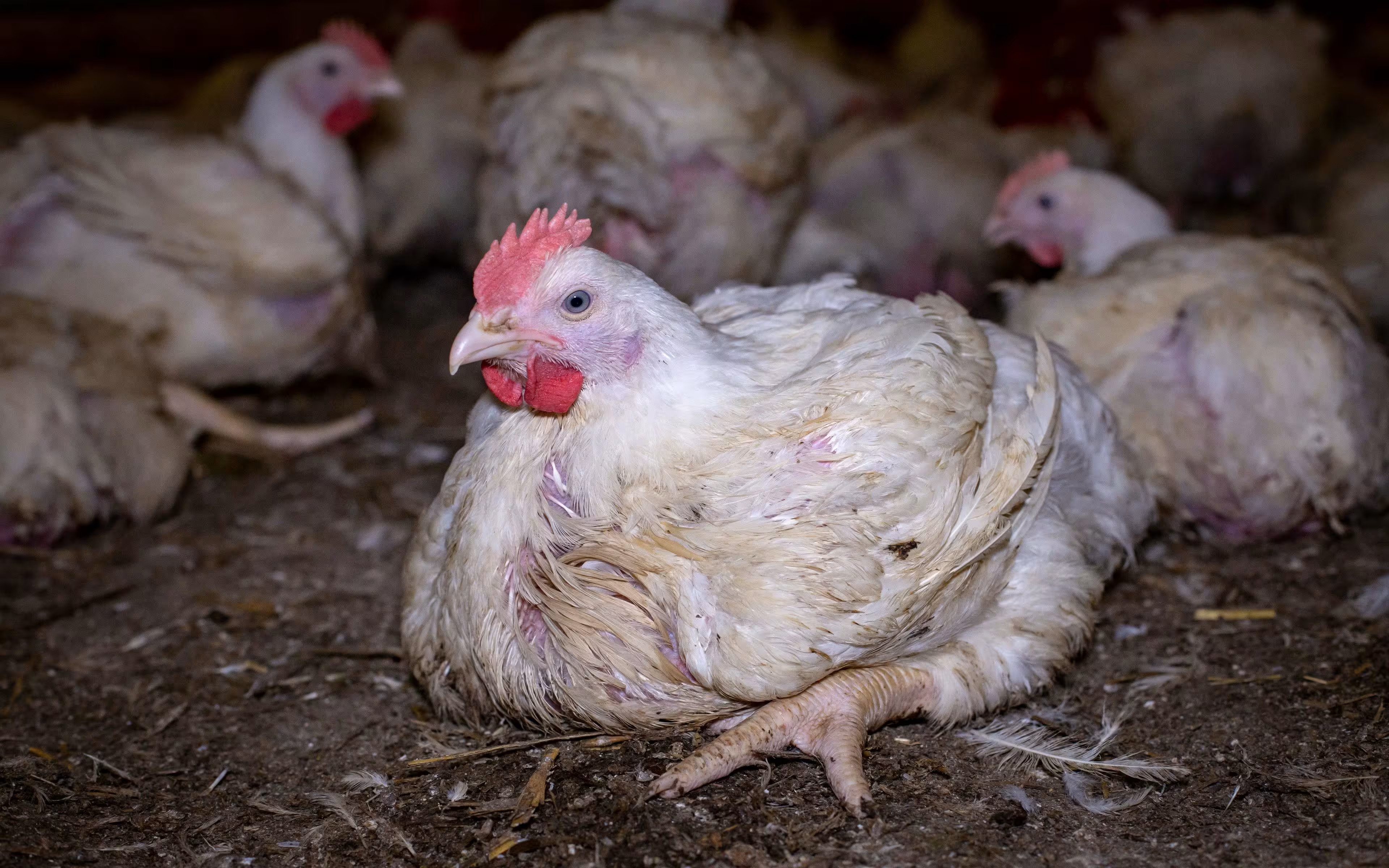


Over one billion chickens are slaughtered in the UK every year. The vast majority - approximately 80% - are killed in gas systems. Most of the remaining 20% are killed by having their throats cut after going through an electrical stunning bath.
With gas slaughter systems - also known as controlled atmosphere stunning - chickens are rounded-up on the farm, packed into crates and transported to a slaughterhouse.
Once there, the chickens usually remain in the transport crates and are placed into a pit, tunnel or chamber which is filled with either carbon dioxide, inert gas (such as argon or nitrogen), or a mixture of both. Birds are exposed to the gas until they lose consciousness and then die.

Gas slaughter systems are widely considered to be the most humane method of slaughter currently used, though they may still cause pain and suffering.
Chickens don’t die instantaneously and with carbon dioxide in particular, chickens can suffer from respiratory distress. While it’s difficult for researchers to know exactly what respiratory distress feels like for chickens, it’s possible that the experience is similar to the feeling of being suffocated.
The second most common method of slaughtering chickens is electrical waterbath stunning. With waterbath stunning, birds are hung upside down by their legs in shackles, run through electrified water to render them unconscious, and then their throats are cut.
Live shackling causes chickens stress and pain. The chicken's legs are compressed by the shackles - this is particularly painful for birds already suffering poor leg health - and hanging upside down is stressful for them. The electrified water bath can also be ineffective, meaning some chickens are still conscious when being killed.
Chickens suffer throughout their short lives on factory farms too, before they even reach the slaughterhouse. Over 90% of chickens raised for meat in the UK come from fast-growing breeds known as Frankenchickens.
Frankenchickens have been selectively bred to grow a huge amount of breast muscle as fast as possible. This fast growth leads many chickens to suffer from serious welfare issues including lameness, breathing problems, burns on their feet known as ‘hock burns’’, and in some cases heart attacks.
Government statistics reveal that approximately 500,000 chickens die on farms every week without even making it to the slaughterhouse. The bodies of these chickens - who are sensitive, intelligent birds - are simply picked up by workers and thrown into huge bins. These deaths are seen by the chicken industry as the cost of doing business.

You can even see evidence of chicken suffering on supermarket shelves. 'Hock burns’ are caused when chickens spend long periods of time sitting in their own waste.
Similarly, ‘white striping’ occurs when a chicken’s body grows too fast for their muscles to receive enough oxygen. You can sometimes find the marks left by hock burns and this white striping effect on chickens in the supermarket.
Can chickens be raised and slaughtered humanely?
Unfortunately, there is no completely humane way to raise and kill an animal. Animals, just like us, have lives that are important to them and they don’t want to die. Moreover, the vast majority of animals raised for food in the UK come from factory farms which are rife with neglect, suffering and abuse.
There are some forms of chicken farming and slaughter which are less harmful than others. For example, The Humane League UK is campaigning for a ban on fast-growing Frankenchickens. By getting the chicken industry to use slower-growing chickens instead, we could win better lives for millions of intelligent, sensitive animals. You can sign our petition here.

Similarly, the killing of chickens with gas - particularly inert gas or certain carbon dioxide systems - is considered to be more humane than electrical waterbath stunning and throat cutting. Many people, however, still find slaughtering animals with gas to be shocking.
If you’re concerned about chicken welfare, the best thing you can do to help them is to choose plant-based alternatives instead of chicken. There are more alternatives than ever before which are delicious, healthy and affordable. It’s as easy as choosing a veggie-burger instead of chicken. Give it a try! Cutting down on chicken by a single meal every week can make a difference.
You can also join thousands of people using their voices for chickens by signing our petition calling for a ban on Frankenchickens today. By opting-in to receive our emails, you’ll receive updates on our campaigns as well as quick, easy actions you can take to make a difference for chickens.
SUPPORT OUR WORK FOR ANIMALS

About The Humane League UK
We are a charity ending the abuse of animals raised for food.
Learn More