An historic moment for farmed animals - but we can’t slow down now
Cages for hens may finally be banned
 Georgie Hancock


Cages for hens may finally be banned


Today, after much anticipation, the Government finally published their Animal Welfare Strategy and there is plenty to welcome, with commitments that could make a real difference for animals of all kinds, including millions raised on farms.
There are real wins here. Commitments that, if delivered well and without delay, could meaningfully reduce the suffering of millions of animals every year.
So what has the Government committed to?
A long overdue ban on cages for laying hens
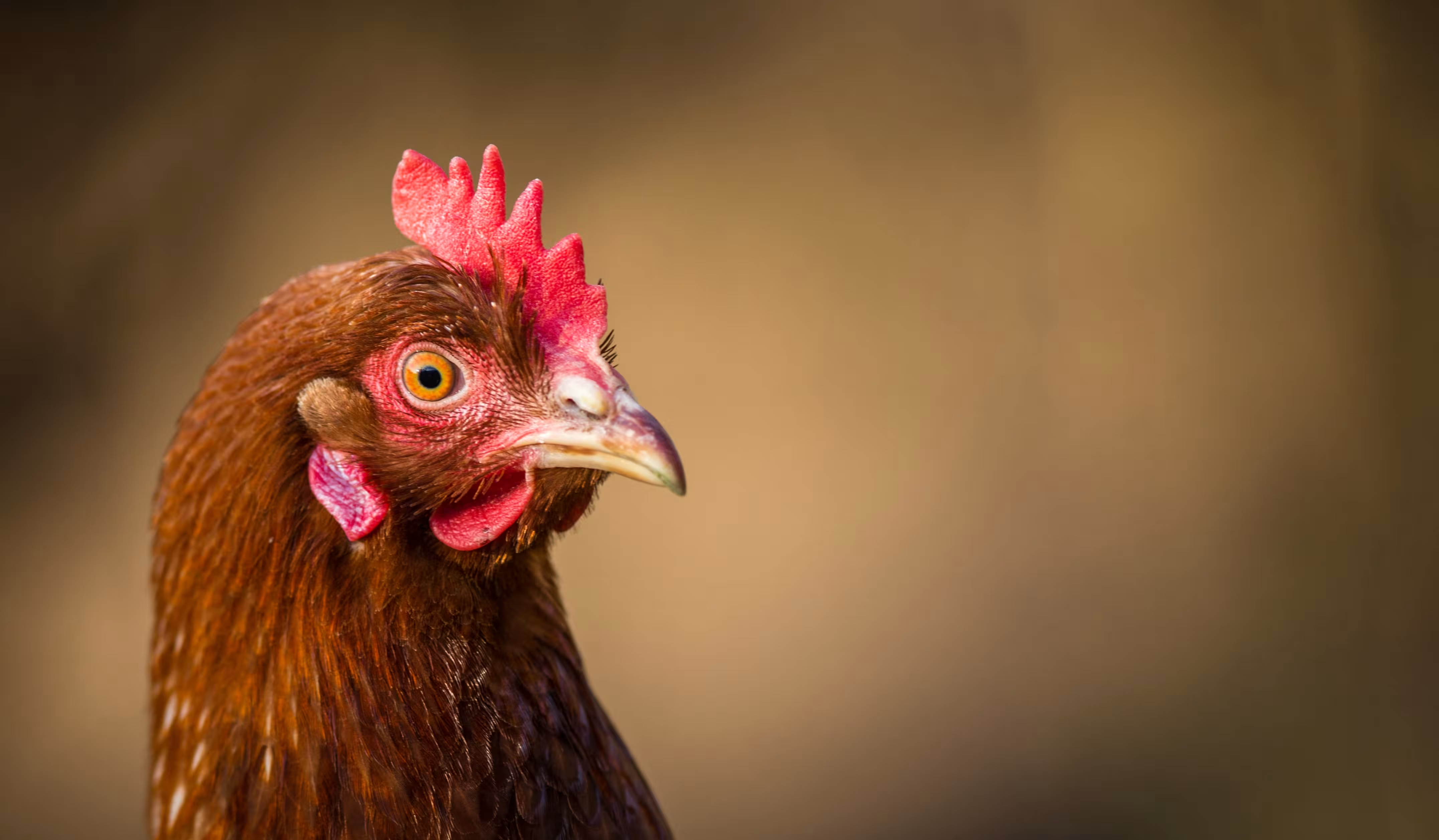
One of the most significant commitments in the strategy is the Government’s pledge to consult on a ban on cages for laying hens, as well as farrowing crates for mother pigs.
Millions of hens in the UK still spend their lives confined in cages that offer them little more space than a sheet of A4 paper, severely restricting their natural behaviours - from perching and dust bathing to simply stretching their wings.
A consultation is not a ban, but it is a critical step forward and a clear indication of the Government’s intentions to address one of the worst production methods used in the UK. It signals recognition that the Government accepts that cages are incompatible with acceptable welfare standards in the 21st century. Countries across Europe are already moving away from cages, and public support for cage-free systems is clear and growing.
Now, the challenge is to ensure this consultation is published without delay, and leads to swift action to finally outlaw cages. We will be making sure the Government follows through on their promises.
Farmed fish: no longer the forgotten victims of factory farming?
Another welcome development is the commitment to consult on new regulations to better protect farmed fish at slaughter.
Fish are often left out of animal welfare conversations altogether, despite being sentient animals who feel pain and distress. In the UK, tens of millions of fish are farmed every year, yet legal protections for their welfare, particularly at slaughter, have lagged far behind those for farmed land animals.
Acknowledging the need for farmed fish to be better protected in law is a vital step. It reflects the growing scientific consensus around fish sentience and the moral responsibility that comes with farming them. If implemented robustly, improved slaughter standards could reduce suffering on a truly massive scale.
But as with the consultation on cages, the Government must move swiftly for farmed fish. For nearly 30 years, their own expert advisory group has consistently recommended that slaughter legislation be updated to include clear requirements to better protect farmed fish, and the Government now needs to get on with it. Clear standards and strong enforcement will be essential if this commitment is to mean real change for fish.
Slower-growing chickens: prioritising welfare over corporate profit
The strategy also recognises the importance of promoting slower-growing breeds of chickens raised for meat.
Fast-growing chickens have been bred to reach slaughter weight in just a few weeks, at the expense of their health and welfare. Many struggle with painful leg problems and organ failure, because their bodies cannot keep up with their rapid growth. Many are unable to walk in their last few days of their short lives, forced to sit in their own waste which causes painful ammonia burns to their bodies.
Encouraging the use of slower-growing breeds is a positive acknowledgement that extreme production efficiency comes at an enormous cost to the animals themselves. Slower-growing chickens have been scientifically proven to suffer significantly less than faster growing breeds. However, promotion alone will not be enough. Without clear targets, incentives, or regulatory change, progress risks being uneven and slow. If we are serious about improving chicken welfare, we need policies that actively support farmers to transition and ensure that higher welfare becomes the baseline.
The missing piece: honest labelling for consumers
For all the progress in the strategy, one omission remains disappointing: the lack of a commitment to introduce mandatory method of production labelling for food products made from animals.
Right now, most shoppers simply don’t have the information they need to make informed choices that align with their values. Voluntary labelling schemes are patchy, inconsistent, and often confusing. Mandatory, clear labelling, showing how animals were raised, would empower consumers to support higher-welfare farming and drive change across the market.
The Government has acknowledged the significant public interest in more transparent labelling, with 99% of individuals who responded to their consultation being in support, yet stopped short of committing to action. This is a missed opportunity. Better labelling would not only help animals, but also support farmers who are already doing the right thing.
In their strategy, the Government has said they will work with relevant stakeholders to explore how improved labelling could improve farmed animal welfare, and we look forward to supporting the Government to make meaningful progress on the transparency of animal welfare labelling. Significant progress worth celebrating - but we must see action.
There is no doubt that the Government’s Animal Welfare Strategy represents genuine progress for farmed animals. Consultations on cages, improved legal protections for fish, and recognition of the harms of intensive breeding all point in the right direction.
But strategies don’t change lives, action does.
Now is the moment to turn commitments into concrete policy, timelines into legislation, and warm words into real-world improvements for animals. Every delay means more lives spent in systems we already know cause immense suffering.
We applaud the Government for launching an ambitious strategy that has the potential to significantly improve the lives of millions of animals. And at The Humane League UK we will keep pushing, urgently and relentlessly, for the higher welfare future that farmed animals so desperately need.
More Like This
UK Government must allow honest debate on cages
A petition asking the Government to ban cages once and for all has amassed 65K signatures in just two weeks. However, the government has issued a highly disappointing response.

Government announces support for Better Chicken Commitment
By announcing financial support for farmers to implement the Better Chicken Commitment, Defra has demonstrated the direction that the Government wants to see animal welfare go in.