Liam Hodgson


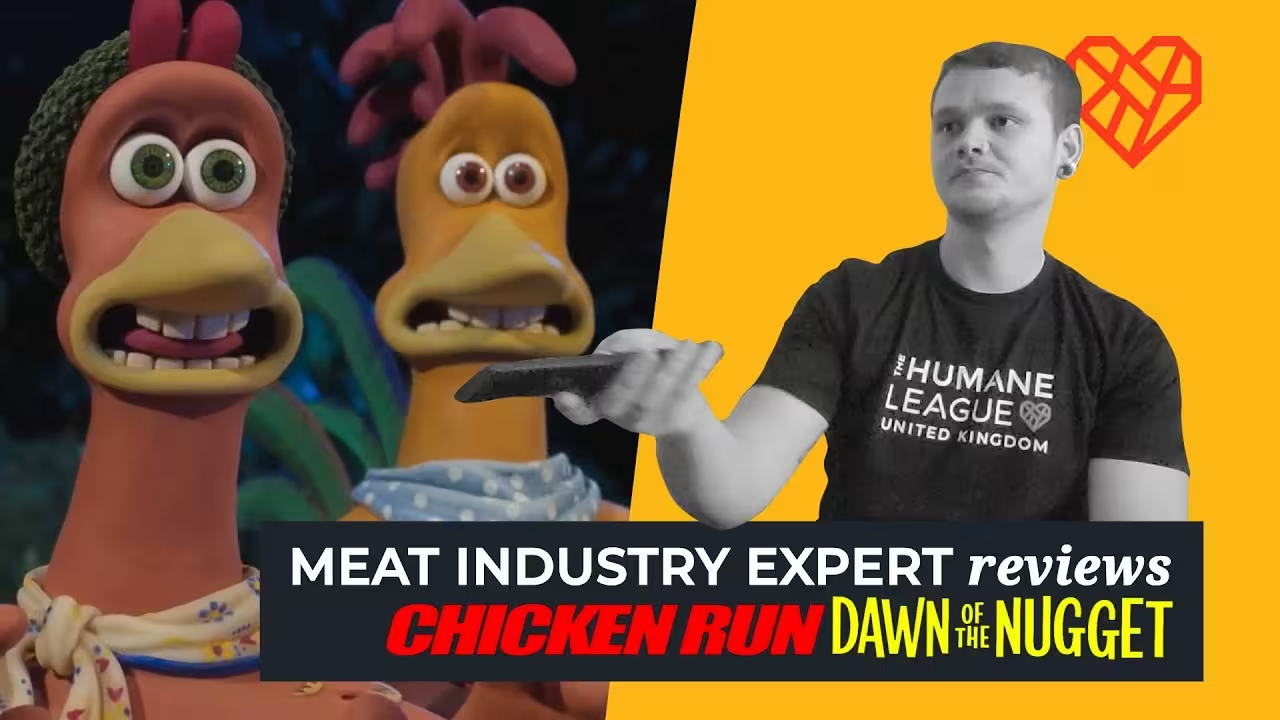
Just how realistic is Chicken Run 2? Ex-industry worker, Liam, spills the beans.
Chicken Run was one of my favourite movies as a kid. A mixture of WW2 drama, daft comedy and talking chickens made it box office dynamite.
Many years later I found myself working up to and becoming a Quality Assurance Manager for one of the UK’s leading poultry producers, where I got to see a lot of the working of the industry that breeds, raises and slaughters around 1.12 billion animals every year in the UK. I remember thinking as I walked into the factory that a lot of the factory equipment reminded me of the nefarious pie machine from the original Chicken Run.
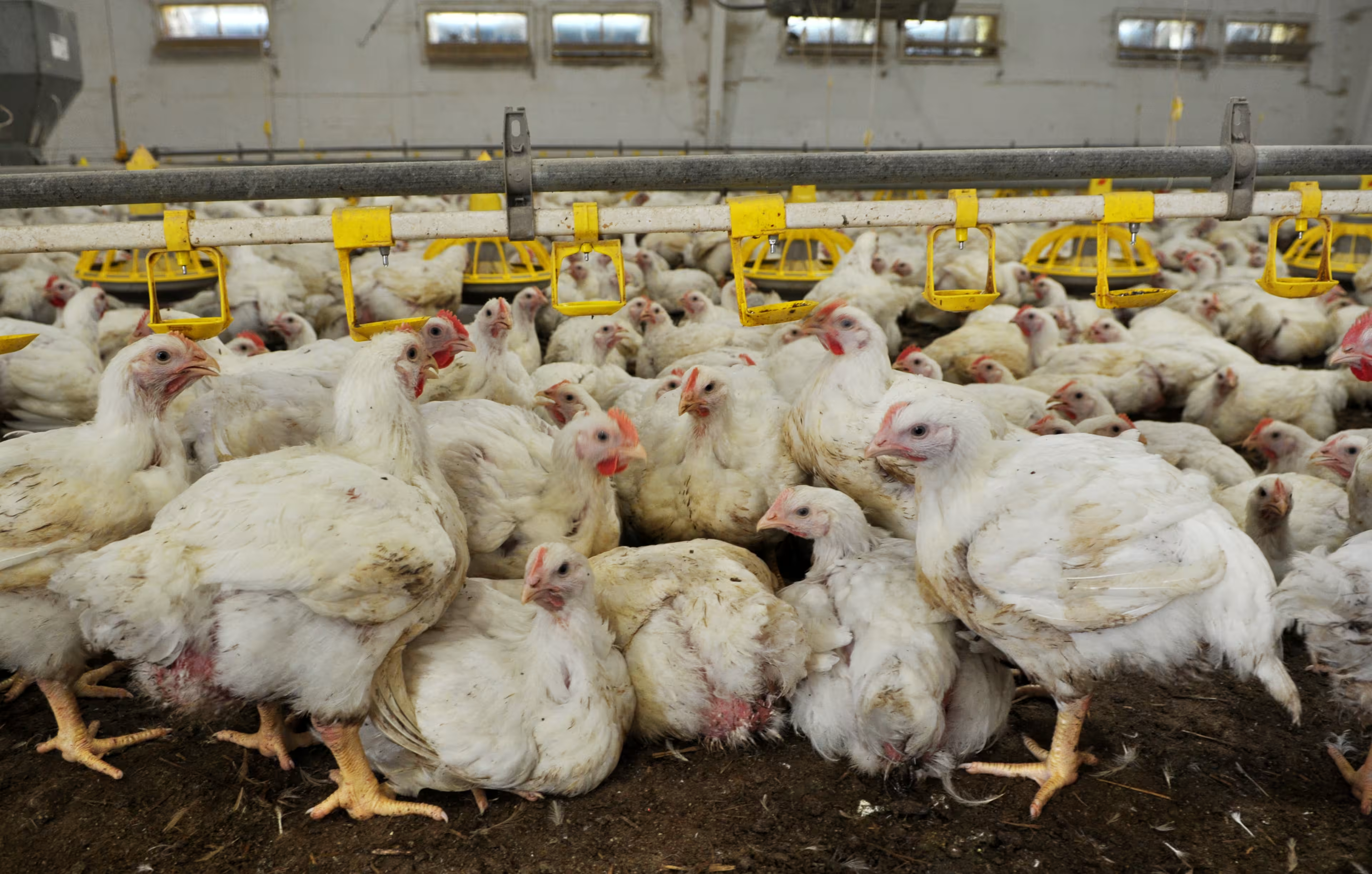
Undercover investigations have revealed the systemic suffering baked into modern poultry farming
Now Chicken Run 2: The Dawn of the Nugget is being beamed into living rooms around the country and, surprisingly, the movie gets a lot right about the chicken industry.
In the original Chicken Run we saw chickens plotting to escape a farm transitioning from collecting eggs to making chicken pies. In the second film Molly, the child of the first film’s protagonists Ginger and Rocky, abandons her human-free island sanctuary in search of adventure, only to be lured into an exciting new home for chickens, one whose human owners have ulterior motives.
Of course, both Chicken Run movies know that chickens are underdogs, and that those whose mission it is to profit from them and eat them will go to great lengths to do so. The villainous Mrs Tweedy is more malicious than my former colleagues, but her fixation on money over the wellbeing of her animals mirrors an industry where the maximisation of profit maps neatly onto the intensification of suffering. By making chickens the protagonists, the movies encourage us to think about how being farmed might feel if we were chickens.
When I started out I didn’t know much about chicken welfare. We were taken on trips to exemplary farms in Northern Ireland, and shown some of the better standards poultry farming had to offer. It was to put our consciences at ease.
However I already knew this wasn’t the full picture; I had visited a breeder farm in the north of England while I was working as a Laboratory Technician. There the barns looked derelict. The ceiling was falling apart, the conditions were dismal and had far more in common with the original Chicken Run’s POW camp than a poultry paradise.
After years of experience within different roles for this producer, and completing a course on chicken welfare with Bristol University, I began to see chickens differently. I learned that their needs were complex, that they thrived when they had space to roam and room to stretch their wings.
I began to see chickens differently. I learned that their needs were complex, that they thrived when they had space to roam and room to stretch their wings.
As my interest in chicken welfare grew, I began to agitate for the company to take welfare more seriously. This particular producer processes around 6 million birds every week, so even small improvements could have a dramatic impact.
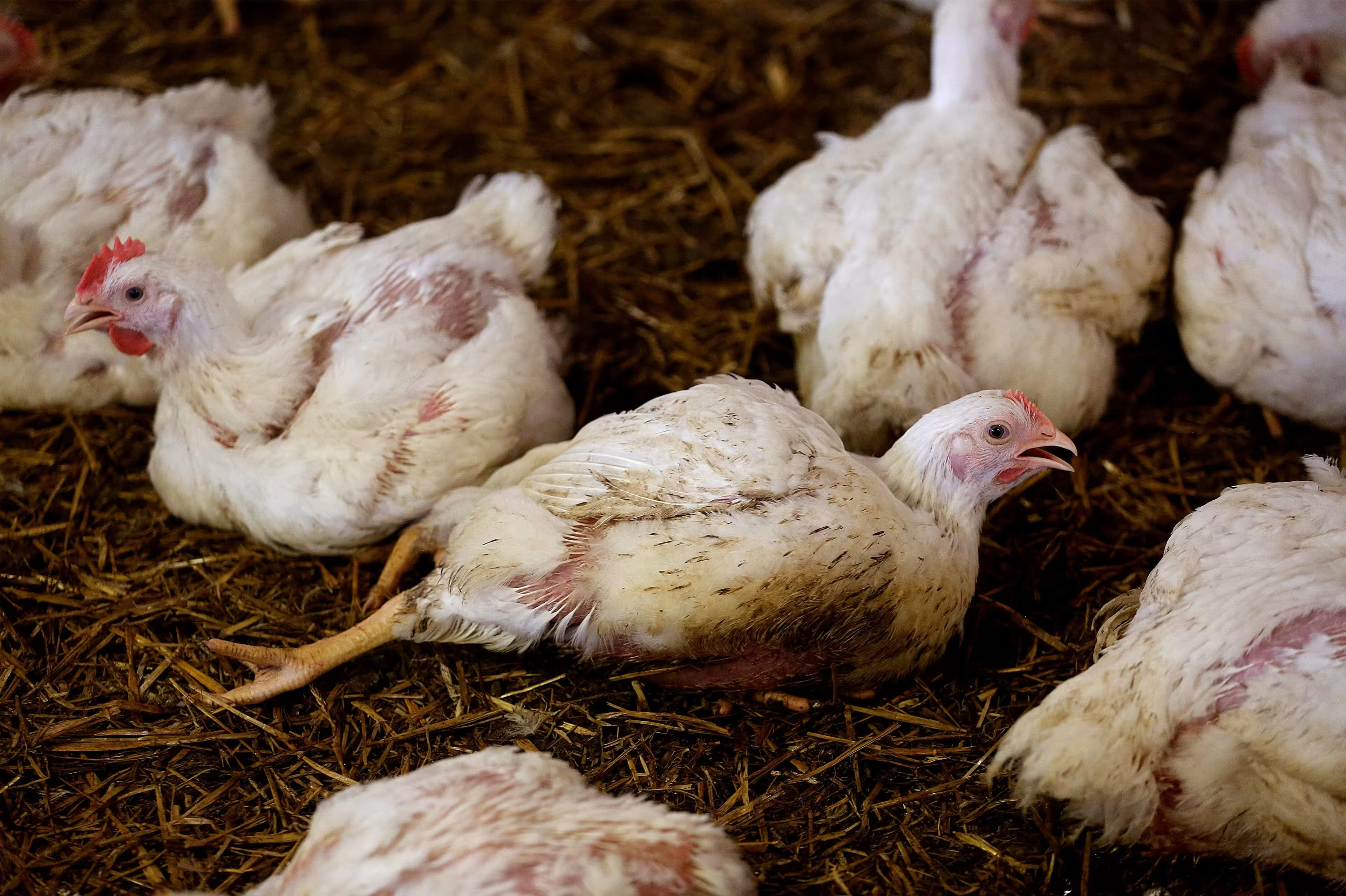
Yet while my concerns were met with polite nods, nothing changed. I became part of a senior management welfare project that was aimed at improving welfare KPI’s. However, we kept raising the same concerns - the same farms were consistently returning animals with signs of poor welfare, like hock burns, caused by birds lying in their ammonia-rich faeces. The agricultural team would accept that this was a problem, and acknowledge the repeat-offenders were at fault. But nothing would change. It felt like as long as the bottom line stayed the same, there wasn't a need to rock the boat.
Chicken Run 2 is also slyly effective at skewering the mismatch between marketing and reality. In the movie the farms are advertised as a chicken paradise, when the actual reality is kept from the public behind closed doors.
Shoppers are sold a weak version of this when strolling through supermarket aisles, where even factory farmed chickens are presented as having a good time. Lidl, who have been at the centre of a campaign by the Open Wing Alliance (a global coalition of animal charities) describe their intensively farmed British Frankenchickens as living in ‘safe and comfortable housing’, and put a picture of free-range laying hens on the meat chicken section of their website, something The Humane League UK has challenged.
Customers across the country are given the impression that chicken farming is still farmers pitchforking hay as chooks dart around their wellington boots.
Yet, undercover investigations have revealed the systemic suffering baked into modern poultry farming, investigations the retailers often attempt to discredit. Sure, the secrets of factory farms aren’t guarded by razorwire and ducks with laser-beams as they are in Chicken Run 2, but their doors are firmly locked, and every attempt is made to avert the public's eyes.
Fast-growing breeds or ‘Frankenchickens’ make up around 90% of all the chickens raised for meat in the UK. These animals explode in size, growing from birth to slaughter weight in just 35 days.
To give you a sense how rapid this is, if human babies grew this quickly they’d weigh as much as an adult tiger at the age of two months.
This saddles the birds with a smattering of extremely unpleasant health problems: lameness, bone and cartilage deformities, organ failure and muscle diseases to name a few. The latest figures show approximately half a million chickens die every week on UK farms.
The widespread use of Frankenchickens, and their confinement to crowded and filthy sheds, is the greatest animal welfare crisis of our time.
Chicken Run 2’s nugget farm supplies Reginald from Sir Eatalot Restaurants and Mrs Tweedy tries to impress Reginald, who represents the money behind the operation. While working in the industry, I saw first hand how chicken producers are at the mercy of food businesses, particularly the retailers. When a retailer said ‘jump’, we’d ask how high.
This is why change must come from supermarkets, who sell a large majority of UK chicken products. While suppliers are the hands and limbs of the chicken industry, processing the animals and doing the dirty work, the supermarkets are the brain and heart - telling the limbs what to do, and filling them with the lifeblood of hard cash.
Ultimately pop-culture comparisons can only go so far. The chicken industry is not a kids movie. The widespread use of Frankenchickens, and their confinement to crowded and filthy sheds, is the greatest animal welfare crisis of our time.
Fortunately, there is hope. Over 350 companies have signed up to the Better Chicken Commitment (BCC), a policy which utilises healthier slower-growing breeds, and provides the birds with more space, natural light and enrichments. These include titans like KFC, Burger King, Nando’s and higher-end supermarkets Waitrose and M&S.
And, The Humane League UK are appealing their legal challenge against the Government in April 2024, which argues that breeding Frankenchickens is unlawful under existing animal welfare laws. This judicial review, if successful, could see the practice of rearing Frankenchickens banned outright.
Chicken Run 2 pits chickens against a callous industry, hellbent on exploiting them regardless of the moral cost. As a former employee of the poultry industry, I hope the viewers take this message seriously.
In reality chickens cannot fight for themselves, meaning we must continue to organise and remind our supermarkets and government that a chicken is more than just a nugget.