


The importance of fish to oceans and how we can help them
We investigate why fish are important for the health of our planet
 THL
THL


We investigate why fish are important for the health of our planet
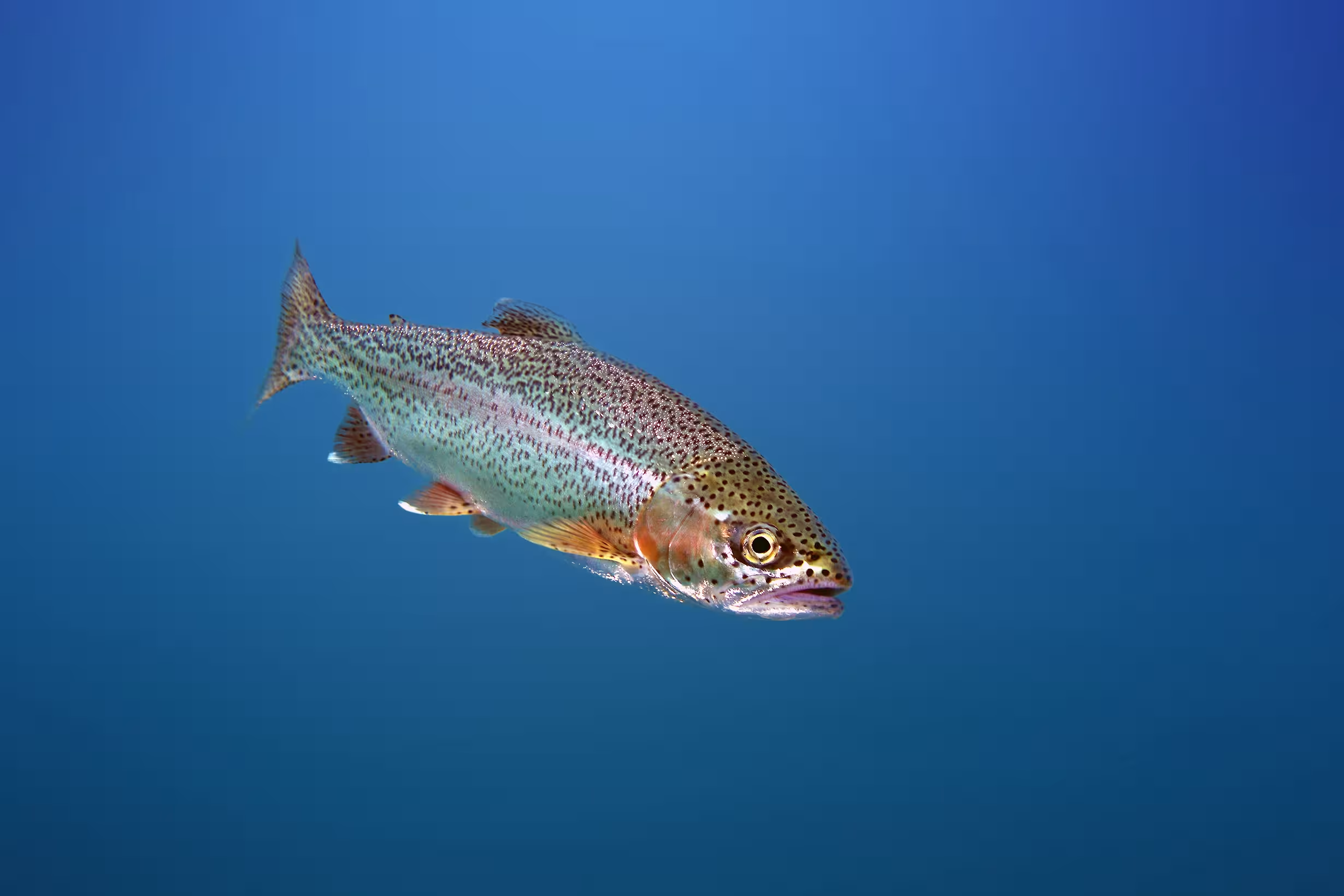


Why fish are important for the health of our planet
Fish play important roles in the health of our ecosystem. Despite this, many people believe them to be boring, when the truth is fish are feeling, smart, and complicated beings.
Here’s what you should know about fish , and why they are so important to the health of our environment.
What are some fascinating fish facts?
It’s easy to look at fish, who are so different from us, and think that they’re uninteresting or simple. The truth is, however, that there are many interesting facts and facets to fish.
For example, did you know that we’ve identified more than 32,000 different species of fish? That’s more than all other vertebrate species combined! As we continue to explore water systems more thoroughly, scientists are discovering more new fish species.
Another interesting fact that might surprise you is that fish can remember things from months prior. They put their cognitive skills to the test in the wild by recalling and avoiding danger and using tools. In labs, scientists have learned that fish can also navigate mazes and locate rewards with their brain power.
Are fish smart?
You may associate tool use and other markers of intelligence with monkeys, apes, dolphins, and elephants, but fish have proven their cognitive abilities repeatedly.
Not only can they remember things they learned for several months (and for some species, years), but they’ve been recorded smashing mollusks against rocks to get at the meal inside. In other words, they use tools.
Do fish feel pain?
A persistent yet wrong belief is that fish don’t feel pain. In reality, a growing body of research into both their anatomy and behaviour suggest the exact opposite.
One inherently problematic but illuminating study involved injecting vinegar into fish mouths. The fish responded by rubbing their heads against the tank, rocking from side to side, and showing other signs of evident pain. Once the fish were given painkillers, the abnormal behaviours subsided.
It’s not just physical pain that fish can feel, either. Researchers recently demonstrated that zebrafish show basic empathy toward other zebrafish, picking up on and reflecting fear felt by other fish. More than that, the fish also paid more attention to fish who had been recently stressed.
Do fish suffer?
Given their ability to feel both physical and emotional pain, it’s not a far stretch to say that fish suffer. Little causes so much suffering to so many fish as fishing, including the recreational variety.
We know that fish suffer when they’re caught because they try frantically to get away, a classic sign of pain. As they pull against the hook stabbing through the flesh of their mouth, the injury gets worse.
But the pain doesn’t end there. Eventually they’ll likely be reeled out of the water and into a boat where they immediately start to suffocate, unable to breath without water. Everything down to their organs and blood flow are impacted by the stress of being taken out of the water.
How do fish impact the environment?
Given that they’re an essential component of healthy water systems, and that 71 percent of the earth’s surface is covered in water, it comes as no surprise that fish have a massive impact on the environment.
Where once an ocean without fish would have been the stuff of fiction, today scientists are concerned it’s a growing possibility and, if something doesn’t change, the direction we could be headed. There could, for example, be more severe on-shore impacts from storms due to dead coral reefs that are unable to survive without fish.
What do fish eat?
Answering the question of what fish eat is like answering the question of what people eat. Like us, their diets are extremely diverse. Sharks, for example, eat everything from other fish to marine mammals, but some species will consume tiny plankton as their favourite food.
Some fish, like pike and muskie, will eat adult ducks or ducklings if given the chance. Meanwhile, deep sea fish have slim pickings at the bottom of the ocean, and will munch on basically anything that comes their way, including burlap sacks or dead trees.
The role of fish in the food chain
The marine ecosystem, including its food web, is extremely complicated, with each of the hundreds of thousands of marine species playing an important role. There are fish at virtually every step of the food chain. From the smallest guppy to the largest shark, they each play a key role in keeping the system balanced.
The harmony of the marine food web may not be able to withstand the human-made pressures challenging it now. Waters are heating up; overfishing proliferates, and waste is being dumped into the water. All of these factors are threatening the sensitive balance of marine life.
The impact of climate change on fish populations
Climate change is placing a lot of pressure on all of us, including fish. As water temperatures heat up, fish populations are depleting.
Fish as indicators of ocean health
Fish play a key role in helping us understand how the ocean is responding to our activity. As pointed out by a study appearing in the journal Water, there are numerous reasons why fish are often used as a means of tracking ocean health.
Among them are their presence in virtually every aquatic habitat; their own health can be used to track the long-term health of the ocean.
Why is it important to protect fish and the ocean?
Fish are important outside of the role they play in many people’s diets.
Why are fish important to humans?
Fish have been a fixture in our mythology, religion, culture, film, stories, and art for generations. They have inspired our imaginations with their brilliant colours and thrilling behaviours. They also play a crucial role in maintaining the health of our waters, which is crucial to our survival.
What are the threats of fishing?
Industrial fishing is one of the greatest threats facing oceans and, more specifically, fish. The industry is driving habitat loss, overfishing, and polluting the oceans.
Habitat Loss
One of the major culprits of habitat destruction are bottom trawlers, a practice that involves dragging a large net across the ocean floor. The net catches anything it comes across, indiscriminate between species who are endangered and those who are being targeted.
It’s not just animals who suffer from bottom trawling; it’s also the sea floor. Trawling nets leave in their wake a barren wasteland.
In its aftermath the water is murky from the sediment the process has dug up. Worse than that, the trawler releases stored carbon and pollutants that were stored in the sea floor.
Overfishing
Every year, hundreds of thousands of metric tons of fish are caught in the UK. It’s estimated that more than a third of all fish stocks are being overfished, while an additional 66% is being fished at the absolute maximum level possible.
Ocean pollution
We’ve all heard about the Great Pacific Garbage Patch, which covers 620,000 square miles of the ocean's surface in mostly plastic. A large portion of that pollution is netting or other abandoned “ghost” fishing gear from industrial operations.
How sustainable fishing protects ocean biodiversity
While sustainable fishing has been around for hundreds of years, some of the practices have only recently been adapted and adopted by industrial fishermen in response to overfishing and the threat of collapsing oceans.
Though sustainable fishing policies may sound nice, they’re far harder to achieve, in large part due to the dangers of being a fisheries observer. Imagine being alone for weeks on a tightly crowded boat of people who know you’re the reason they could lose their jobs or get written up by a boss. That’s basically the role of fisheries observers who board boats to monitor whether fishing is being done sustainably.
Disputes can get so severe that people, usually the observer, have even lost their lives. With these being the stakes, it’s reasonable to be skeptical about whether fish are actually being caught sustainably.
What are sustainable fishing practices?
Some of the most successful sustainable fishing practices have been used by Indigenous communities for generations.
For example, some groups will only fish for particular species and at specific times of year, allowing the fish population time to bounce back. They will usually only catch what they need, and use less environmentally harmful methods of capture than the destructive trawls industrial fishermen are known for.
Why has THL chosen to campaign for fish over other farmed animals?
THL focuses on fish because of the sheer scale of suffering they endure. Every year, 55 million fish are killed in the UK. Yet they are often overlooked by laws aimed at protecting farm animal welfare.
What laws exist to protect fish?
In the UK, there are two types of laws regarding fish: those that protect specific fish and those that protect fisheries.
The Wildlife Countryside Act is an example of the former. Once listed under the law, certain species of fish are protected from being targeted by fishermen.
In order to be covered, an animal must be considered endangered, so the vast majority of fish species are not protected.
The UK has recently announced new plans aimed at protecting fisheries far into the future. Among the new rules are outlines for how to manage the stocks of specific species of fish who are commonly caught. Depending on species, the plans may contain specific seasons in which they can be fished, instructions for additional research, or other tactics crafted to meet the goals of industry and government.
How can we help fish?
All of us can take steps to protect fish and their future generations and, in so doing, protect the oceans we all depend upon.
Prevent water pollution
Opting away from industrially caught fish is a great first step, as these massive vessels contribute heavily to the plastic pollution in oceans.
Leave them off our plates
An even better step is to forgo eating fish altogether and opt for plant-based alternatives instead. Have you ever tried “fish” made out of hearts of palm or vegan tuna? Delicious.
Get involved
We’re fighting for fish, so one way that you can help fish is to sign up for email updates to hear all about what’s happening with our Forgotten Fish campaign.


SUPPORT OUR WORK FOR ANIMALS

About The Humane League UK
We are a charity ending the abuse of animals raised for food.
Learn More