


How do animal mothers bond with their babies?
This Mother’s Day, learn about some of the surprising and touching ways that animal mothers bond with their babies.
 Jamie Gittins


This Mother’s Day, learn about some of the surprising and touching ways that animal mothers bond with their babies.


Billions of animals around the world are trapped in factory farms. These farms allow little opportunity for mothers to express their natural desire to care for their babies, who are instead often separated or killed shortly after birth.
Hens and their chicks
Chickens are great communicators. They have more than 24 different vocalisations which they use to convey important information to other chickens in their flock such as ‘there’s a predator nearby!’ or ‘thanks for the food!’.
But did you know that mother hens even communicate with their baby chicks while they’re still in the egg? Just like a human mother might talk to her baby while she’s pregnant, hens chatter to their unhatched chicks, often with quiet clucking or purring sounds. While the exact scientific reasons for these sounds are unknown, it’s suspected that it helps the chick to get used to the sound of their mother’s voice. In the final stages of incubation, the chick inside the egg will even start responding to their mother by peeping back!
Unfortunately, factory farms do not allow any opportunity for these beautiful bonds to form between mothers and their chicks. Millions of hens in the UK are kept in cages where they can barely move and must lay over 250 eggs per year. These eggs are then taken away to be sold or hatched. Any of the hatched chicks who are males (and therefore useless to the egg industry) are killed shortly after being born.
Pigs and their piglets
Pigs are considered to be the fifth most intelligent animal in the world, and display remarkable memory, social, and emotional capacities. Research has shown that pigs can comprehend symbolic language, plan for the future and understand the intentions of others. They are even capable of learning to play joystick-operated video games.
As well as displaying amazing intelligence, mother pigs - known as ‘sows’ - are also incredibly loving and form strong bonds with their piglets. A sow has a strong instinct to build nests for her babies, and will cuddle up to her piglets on cold days to keep them warm. Sows also sometimes sing to their babies to let them know it’s time for food, with their babies recognising their mother’s voice.
Sadly, barred metal cages called farrowing crates are still commonly used in the UK. Pregnant sows are placed in the crates shortly before giving birth and kept in there for up to a month. The crates are incredibly restrictive, preventing sows from turning around freely and building nests.
Cows and their calves
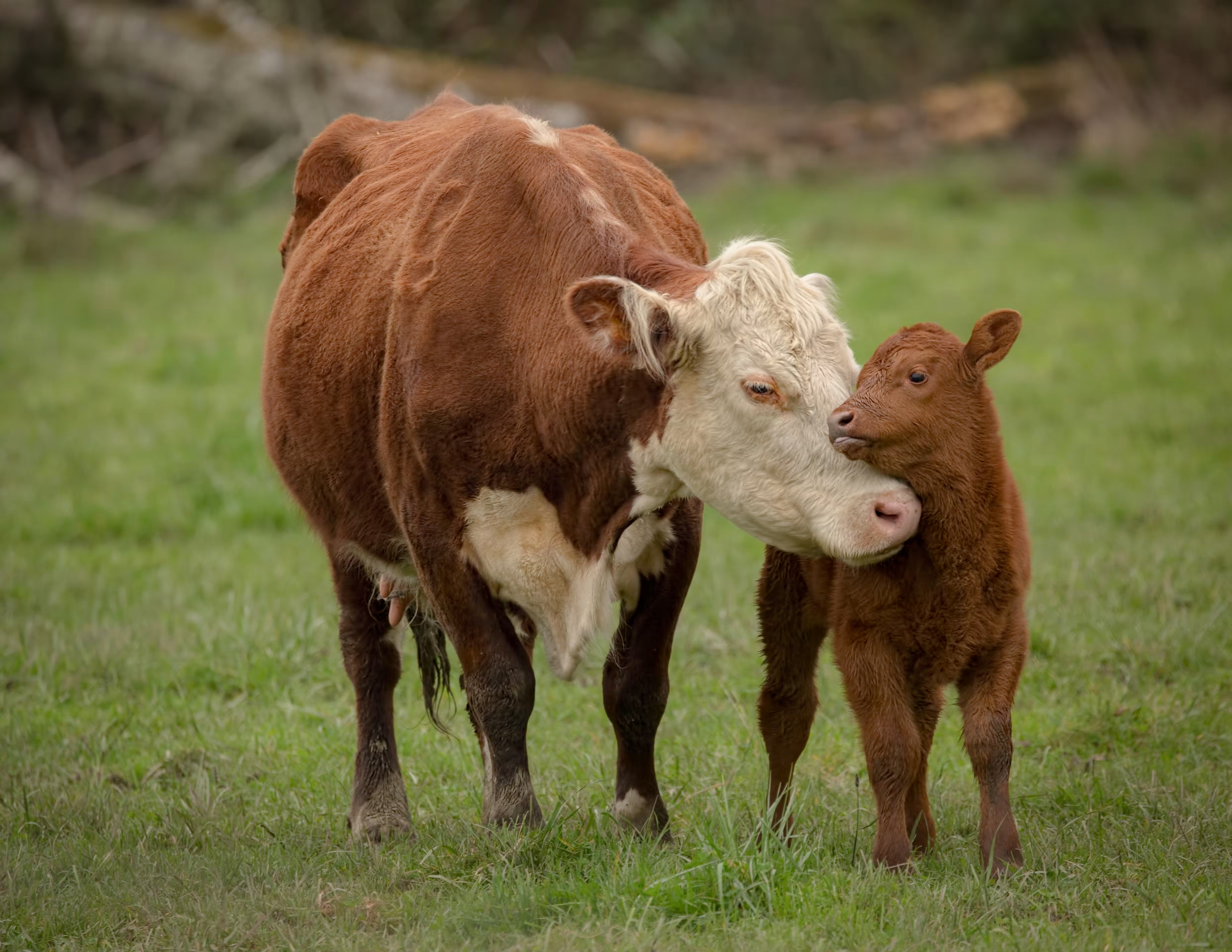
Cows have wonderful maternal instincts and instantly form strong bonds with their calves. After giving birth, the mother will lick and nuzzle her calf clean and make a unique sound to encourage her calf to get up and begin nursing.
When researchers studied how mother cows would respond to an unfamiliar vehicle approaching their calves, they found that 99% of mother cows moved between the vehicle and their calves, presumably to physically protect them. A mother cow’s love for her calf is also clear when she is separated from her baby: the whites of her eyes increase dramatically which is a sign of fear and anxiety.
It is unsurprising that the dairy industry’s practice of separating mother cows from their calves shortly after birth causes immense distress and long-term negative consequences for the calves. Sadly, a mother cow must endure this traumatic loss many times throughout her short life, as just three months after giving birth and losing her calf, she is again forcibly impregnated.
Take action for mothers and babies trapped in factory farms
No mother, whether she is a hen, a pig, a cow, or a human, should have to endure the heartache of being separated from her babies. You can help us to fight for the rights of animals on factory farms today by joining us.
SUPPORT OUR WORK FOR ANIMALS

About The Humane League UK
We are a charity ending the abuse of animals raised for food.
Learn More