


How long do fish live, and what do fish usually die from?
Farmed fish largely live short, unhappy, and confined lives. Read more and sign the petition to give fish the same protection as other farmed animals.
 Matthew Chalmers


Farmed fish largely live short, unhappy, and confined lives. Read more and sign the petition to give fish the same protection as other farmed animals.


Wild salmon range thousands of miles and wild rainbow trout thrive in the fast running waters of the Northwest Pacific - but when farmed their lives are very different.
Instead of ranging for thousands of miles, farmed salmon have a range of dozens of metres, with each sea cage containing as many as 100,000 animals. Farmed trout spend their lives in polluted, murky liquid instead of the crisp clear waters of Northwestern America.
How Long Do Fish Live in the Wild?
In the UK the major farmed fish species are trout and salmon with up to 25 million trout and 52 million salmon raised and slaughtered each year. This makes fish the second most farmed vertebrate in the UK after chickens.
In the wild, Atlantic salmon, the most heavily farmed species, live from 5 to 8 years and rainbow trout live from 4 to 6 years.
What Do Farmed Fish Usually Die From?
With as many as 77 million fish farmed in the UK every year for their meat, it is unsurprising that their number one cause of death is human beings.
However, while fish are trapped in the fish farming (also known as ‘aquaculture’) industry, there are many other things that can kill them; from disease to pollution and parasites. These are all hazards which have come about solely due to our farming of these animals.
How Long Do Farmed Fish Live Before Slaughter?
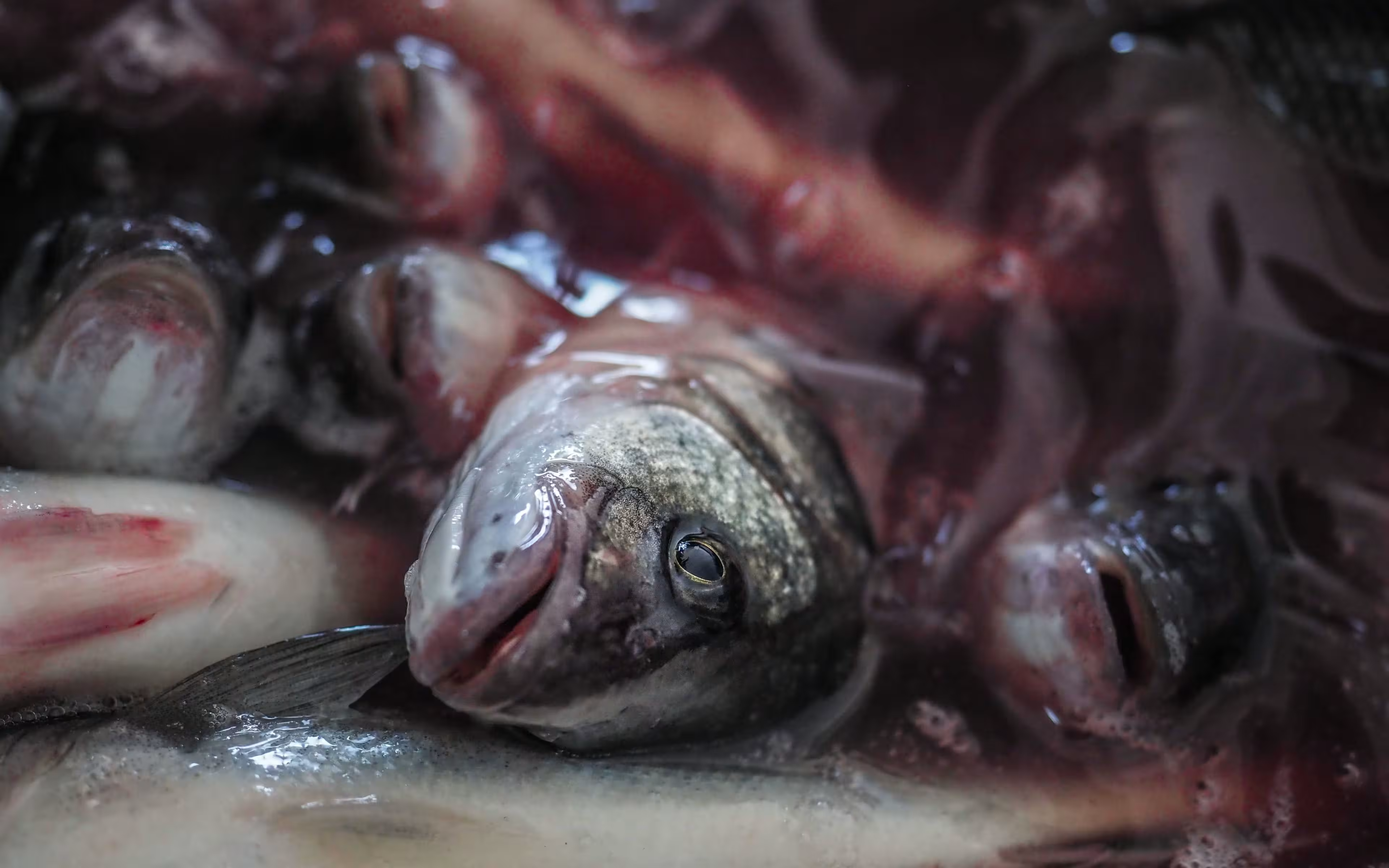
Farmed fish live significantly shorter lives than their wild counterparts. Farmed salmon will be reared for 2 to 3 years before being slaughtered and farmed rainbow trout tend to live a mere 9 to 20 months old before they meet their painful and violent end.
What Factors Affect a Farmed Fish’s Lifespan?
Although even the healthiest of farmed fish will meet a premature end when they are slaughtered, many won’t even make it to slaughter and will die during the farming process. Here are some of the factors which can cause suffering and an early death for farmed fish:
Housing
Trout mostly live in raceways and ponds which are typically 2-3 metres wide, 12-30 metres long and 1-1.2 metres deep.
Salmon, who range for up to 7,000 miles in the wild - from their rivers of birth into the open ocean and then back for spawning - are typically kept in pens which generally have a 120 metre circumference and are 15 metres deep.
These small spaces are intensely overcrowded, and this damages the health and welfare of the fish. Overcrowding can lead to higher injury rates, poor water quality and increased susceptibility to disease and more aggression between individuals.
Breed
Much like the modern day chicken, farmed fish species have been selectively bred for traits such as rapid growth and, as with chickens, this causes many health problems. Farmed salmon grow anywhere between two and five times quicker than those in the wild.
As a result, over 50% of farmed salmon are estimated to be partially or entirely deaf due to fast growth. Fast growth in salmon has also been linked to a higher incidence of cataracts. As these animals have such deprived senses they are much more vulnerable to predators - farmed salmon fry released into the wild have a survival rate ten to twenty times lower than wild salmon.
Disease
While fish can also catch diseases in the wild, farming puts them at much more risk. As thousands of animals are confined in small spaces, disease outbreaks become much more likely to occur.
Farmed salmon are at risk of illnesses like Pancreas Disease (PD), Salmonid Rickettsial Septicaemia (SRS) and Infectious Salmon Anaemia (ISA). A massive outbreak of ISA in Chile reduced salmon production by three quarters between 2005 and 2010.
ISA is a terribly painful disease causing severe anaemia, ascites (accumulation of fluid in the body cavity), haemorrhage in internal organs and darkening of the liver. Fish also tend to appear lethargic with pale gills and blood spots in the eyes.
There are many diseases rainbow trout are susceptible to including enteric redmouth disease (ERM) and Rainbow trout fry syndrome. ERM is a bacterial infection, normally caused by polluted water, and causes severe blood poisoning which can be detected by signs of haemorrhaging like bulging red eyes.
Rainbow trout fry syndrome is another particularly terrifying and awful disease. Symptoms include reduced appetite, darkening of the skin, the death and decomposition of large amounts of flesh on the fish’s fins and tail, and sometimes the animal’s muscles and spinal cord will become exposed.
Perhaps the most widespread and damaging of all the plagues that farmed salmon and trout face are infestations of parasitic sea lice. These small, carnivorous crustaceans feed on the blood, flesh and mucus of host fish. While they do naturally attach to fish in the wild, in concentrated aquaculture pens huge swarms of sea lice can form, biting and tearing off the flesh of their helpless hosts and often killing them.
Veterinary Care
Veterinary care for fish happens on several levels. The first line of defence against disease are biosecurity measures like ensuring the nets that keep the fish in their pens are secure, so that the farmed animals cannot interact with wild ones.
Fish are also routinely vaccinated against disease.
However, when disease outbreaks occur farmers use a range of chemical and medicinal treatments, including antibiotic use. Antibiotic use in farming is a major danger to humans, because of the potential to create antibiotic resistant superbugs that are immune to medicines. While fish farmers are trying to switch to vaccinations as an alternative to antibiotics, this is less certain in those countries with more deregulated aquaculture sectors.
Chemical treatments are used for sea lice infestations, but there are considerable concerns that these chemicals cause major environmental problems when they leach into the ocean, and there is fear that sea lice are becoming resistant.
There are also efforts to treat sea lice by keeping cleaner wrasse with farmed species, which help groom the other fish - however, these animals are subjected to similarly severe welfare problems themselves. They have a high mortality rate, mostly due to unknown causes. The biggest known cause of cleaner fish death are ulcers and fin rot - products of the filthy, unnatural environments these animals are forced to endure.
Slaughter
Tens of millions of farmed trout and salmon are slaughtered in the UK every year. Unsurprisingly, it is the biggest cause of death for farmed fish. Both farmed salmon and trout are either killed through percussive or electrical slaughter.
Percussive slaughter is done by a machine which strikes the fish on the head with a hammer, stunning the animal, before the fish’s gills are cut and the animal bleeds out. Electrical stuns are administered in water to the fish, irreversibly stunning them.
However, both systems can fail and lead to cruelty. Those animals with longer or shorter snouts may end up being struck in the wrong place by a percussive stunning machine, therefore being improperly stunned when they come to have their gills cut. Staff are supposed to manually stun the animal with a club at this point, but this doesn’t always happen. In an undercover investigation into Scottish salmon slaughterhouses done by Animal Equality in 2020, salmon had their gills cut when conscious, were repeatedly clubbed improperly, and some fell to the ground and died of suffocation.
With electrical stunning, if the voltage is too low the fish may regain consciousness while their gills are being cut. These hazards make a strong argument for better oversight of the slaughter process, which can be achieved by ensuring that stunning for farmed fish is mandated by law, as well as providing detailed instructions for the slaughter process. The Government must take responsibility for this process - at present the industry is entirely self-regulated.
Which Fish Holds the World Record for the Longest Life Span?
The Greenland shark is the longest living fish and the longest living vertebrate of all. They are native to the cold Atlantic and Arctic waters of Northern Europe and North America.
They can live to be up to 500 years old! That means that there may be individuals out there who were born in the reign of Henry VIII (1509-1547).
When it comes to salmon and trout, the oldest salmon was possibly a certain Dolly who died at the ripe old age of 15. The oldest recorded rainbow trout died when they were 11 years old but the oldest recorded lake trout was a whopping 70 years old.
What Can I Do to Help Fish?
Farmed fish deserve better lives than the confined and agonising ones they are so often stuck with. The good news is that we are making a stand for farmed fish in the UK with our Forgotten Fish Campaign, and we need your help.
Sign our petition to get pre-slaughter stunning for farmed fish mandated by law.
Note: Why 'fish' and not 'fishes'? In his book ‘What a Fish Knows’, ethologist Jonathan Balcombe points out that referring to their plural as ‘fish’ lumps them together ‘like rows of insentient corn.’ But the truth is that fishes are individuals with personalities, relationships and the capacity to feel. The Humane League UK wants to set an example of recognition and inclusion in the language that we use as well as fighting to improve the rights of fishes farmed for food. We advocate for using the plural ‘fishes’ instead of ‘fish.’ For the purposes of this article, we have used the more commonly-used ‘fish'.
More Like This



SUPPORT OUR WORK FOR ANIMALS

About The Humane League UK
We are a charity ending the abuse of animals raised for food.
Learn More