


Get the buzz on welfare in the insect farming industry
As the buzz around insect protein grows, insect welfare is becoming increasingly important.
 Jamie Gittins


As the buzz around insect protein grows, insect welfare is becoming increasingly important.
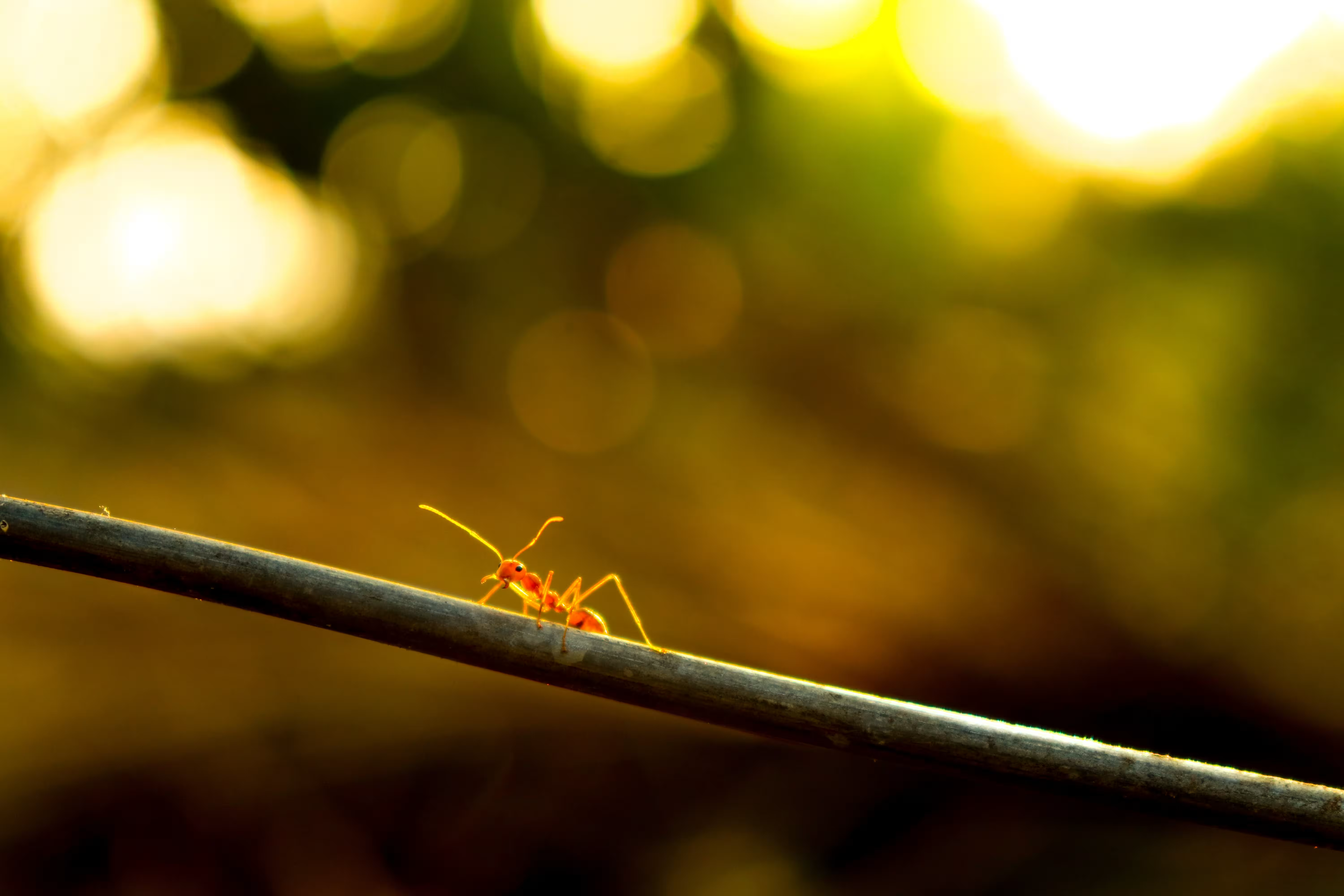


The use of insects as a food source has received growing interest in recent years. However, industrial insect farms face questions about animal welfare. With so many enticing and eco-friendly plant-based options already available, we need to challenge an industry that relies on raising and killing billions of insects each year.
Interest in the use of insects as a food source for humans has been growing recently in the UK and Europe. While you might not have seen them in your local supermarket yet, new insect-based products such as cricket cookies, insect snack bars, and protein powders are now available from specialist stores and online.
Supporters point towards the environmentally-friendly nature of insect farming as one of its main benefits, since insects require less water, food, and space than other animals.
Insect protein as a food source for farmed animals is also receiving some hype, with insect alternatives to animal feed and fishmeal in development.
The result is multiple levels of suffering - insects are raised in factory farm conditions, often with the destiny of feeding animals who also suffer under the factory farming system.
What is it like for insects on farms?
Currently we cannot be certain exactly if, or what, insects feel. However, there is scientific evidence to suggest that insects' brains have some of the same features that are important for consciousness in invertebrate animals. Research into insect brains seem to indicate that their ‘midbrain’ ties together memory, perception and other key parts of consciousness and uses this information to decide what to do. They are not just automated robot-like beings.
Further research suggests that some insects, like flies, may experience emotions similar to fear and anxiety.
Insects, just like other animals, display some impressively intelligent behaviours, as anyone who has ever watched the incredible bee waggle dance will know. This dance is a language used to pass information to other bees. Honey bees have been shown to imitate the technique of the bumble bee when stealing nectar from flowers without pollination - said to prove observational learning. In experiments, it has been possible to train honey bees to play ‘golf’, moving a ball into a hole, as well as touching a plate with their antennae to get sucrose.
Ants too, have been shown to exhibit a high level of complex behaviour. They are able to identify between the same smell on food versus a competitor ant and react accordingly, therefore changing their behaviour based on context. Some researchers suggest that, when an ant who has found food or a new nest site brings another ant to share that knowledge, ants are demonstrating that they are capable of social learning. Also, amazingly, ants have been shown using tools to transport food, including liquid, back to their nest, and show preferences for the types of tools used.
Like factory farms for chickens, the main aim for insect farms is to process as many animals as cheaply and efficiently as possible and any form of welfare often comes second. This means conditions on industrial insect farms mirror those of factory farms in many ways, with high densities, unnatural environments, and large numbers of deaths occurring before slaughter.
In addition, slaughter methods such as freezing are used by some farms and this method has been controversial in its effectiveness at preventing suffering during death. Unfortunately, to our knowledge there has been little to no research done on the suffering caused to insects from different slaughter techniques.
Some estimates suggest that nearly 100 billion insects – an unimaginably huge number – are living on insect protein farms on any given day. Despite the possibility that many of these small beings are suffering on these farms, there are currently very few regulations in place to protect them. EU animal welfare laws for animal farming, transport and slaughter all do not apply to insects as they are not vertebrates.
The IPIFF, an EU organisation which represents the interests of insect producers, has taken a positive step by encouraging good animal welfare practices in the absence of these regulations.
However, without proper regulation, producers are mostly free to raise and kill insects how they want. As a result, there is no guarantee that producers of insect products are meeting basic welfare standards. Indeed, many insect protein websites make little or no mention of how they ensure the welfare of the insects they farm.
How can I help insects?
Animal welfare laws in the EU, as well as in other countries around the world, currently lag behind the scientific evidence by largely ignoring the welfare of insects and other invertebrates such as lobsters and prawns.
As a consumer, you have the power to affect the future use of insects for food. Make your voice heard by avoiding, and encouraging others to avoid, eating insects.
By cutting down on, or avoiding animal products altogether, you can make an even bigger impact. Insects are raised on factory farms for food for humans and animals. Not only do they suffer, but they are used to feed animals also suffering on factory farms. By choosing not to support this industry, you can help create a better future for all animals.
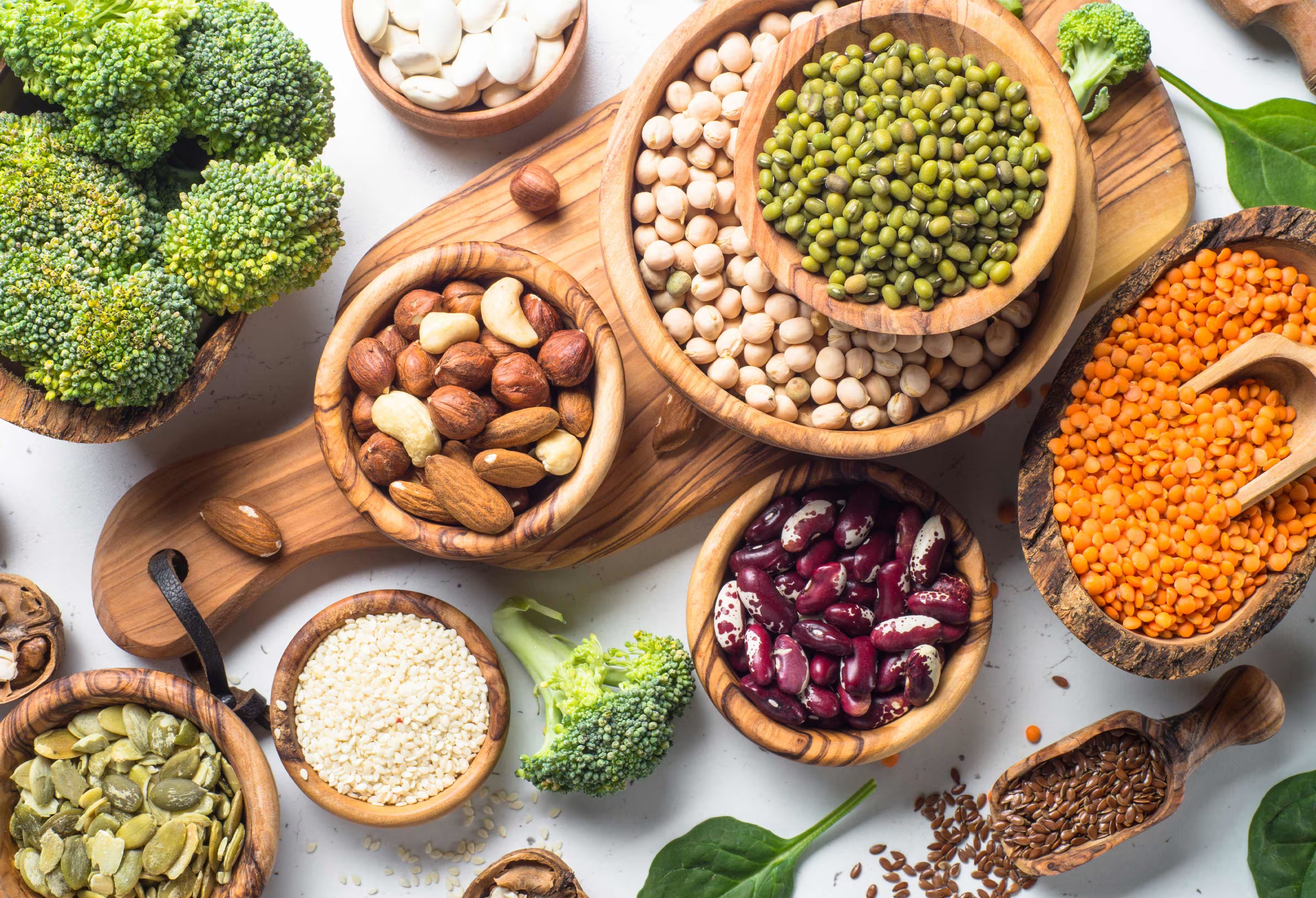
When there are so many high-protein, delicious, and eco-friendly plant foods available already, there is no need to eat food that relies on raising other beings for slaughter.

SUPPORT OUR WORK FOR ANIMALS

About The Humane League UK
We are a charity ending the abuse of animals raised for food.
Learn More