


What is activism and how to get involved
Activism has changed the world, empowering people to speak out about the climate, social justice, and animal welfare. But what exactly is activism and how can you become an activist?


Activism has changed the world, empowering people to speak out about the climate, social justice, and animal welfare. But what exactly is activism and how can you become an activist?


What is activism?
Activism is the act of campaigning to bring about political or social change. This can involve organising protests, engaging in lobbying efforts, and creating educational campaigns. Activists work to address issues that they are passionate about, striving to make a positive impact on society.
The importance of activism lies in its ability to bring attention to issues that may be overlooked or ignored by mainstream society. Through activism, individuals and groups can influence public opinion, shape policy decisions, and drive social change. Historically, activism has played a crucial role in securing rights and freedoms for various marginalised groups, proving that collective action can lead to significant progress.
Key moments in activism
Key moments in activism history demonstrate its power and impact on our society. For example, the civil rights movement of the 1960s in the United States, led by figures like Martin Luther King Jr., brought about the end of segregation and secured voting rights for African Americans. The women's suffrage movement, which culminated in the early 20th century, won women the right to vote in many countries around the world.
The role of activism in modern society
In modern society, activism continues to play a vital role.
The global climate strikes, inspired by Greta Thunberg, have mobilised millions to demand action on climate change.
The #MeToo movement highlighted the magnitude of the problem the women face with sexual abuse, sexual harassment, and rape.
Black Lives Matter has continued to highlight and fight the discrimination and racial inequality experienced by Black people.
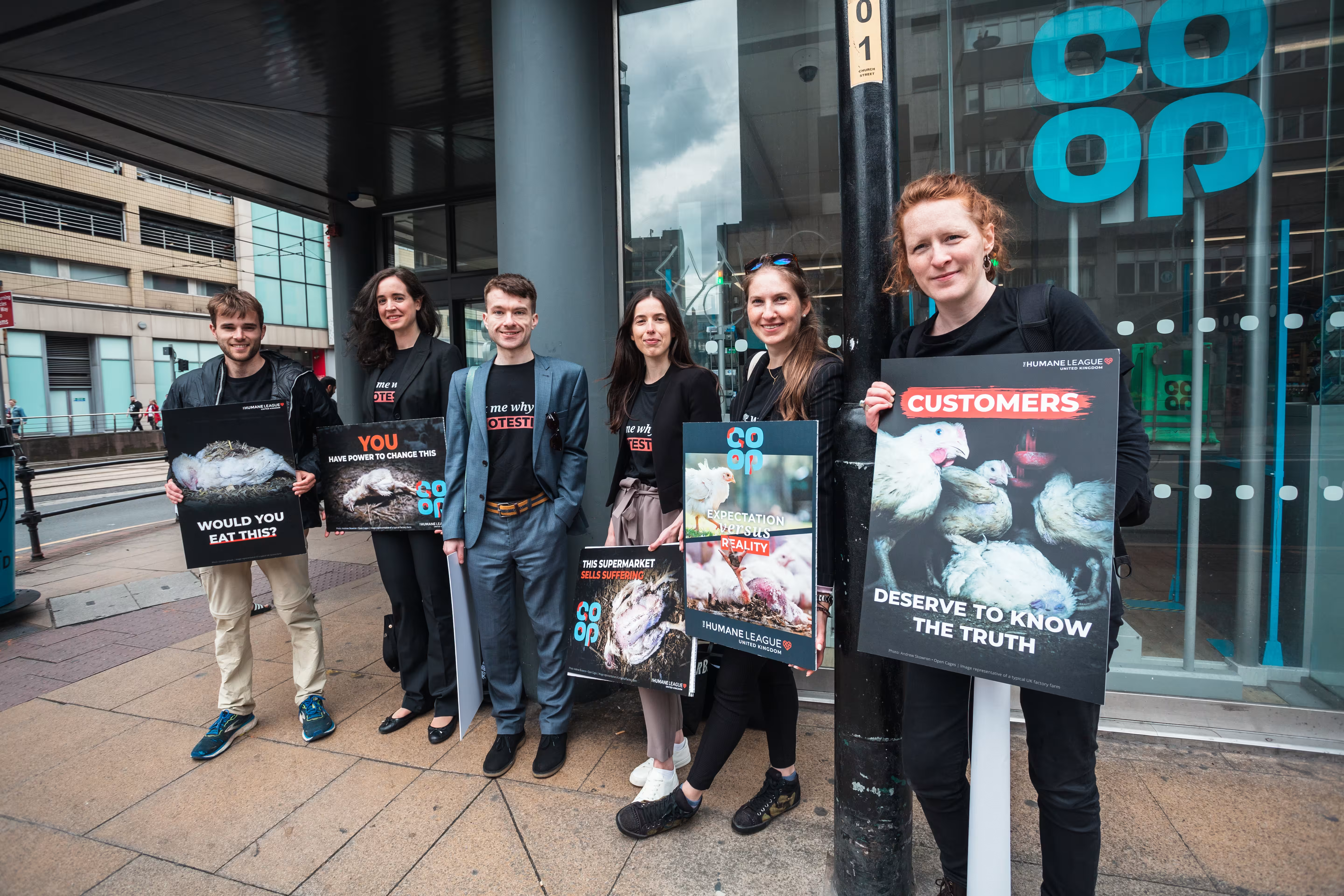
And of course in the animal welfare movement, activists demand better protections for animals and an end to their suffering. The Humane League UK are relentlessly challenging the Government and companies and working to end the abuse of animals raised for food. Most recently, most of the big UK supermarkets have agreed to give chickens raised for meat more space. And, even though cages for egg-laying hens are still legal, battery cages have been banned in 2012, thanks to animal activists like Chickens’ Lib.
Activism raises awareness, shapes public discourse, and pressures policymakers to enact change. It empowers individuals to stand up for their beliefs and work towards a more just and equitable world.
What different types of activism are there?
Animal activism
Animal activists work to prevent animal cruelty and promote humane treatment of animals. They campaign against practices such as factory farming, animal testing, and hunting. This can involve direct action, such as rescuing animals, or advocating for legislative changes to protect animal welfare.
Environmental activism
Environmental activists focus on issues such as climate change, pollution, deforestation, and conservation. They work to protect natural resources and promote sustainable practices. Actions can range from organising clean-up events to lobbying for policy changes that reduce carbon emissions.
Social justice activism
Social justice activists advocate for equal rights and opportunities for all individuals, regardless of race, gender, sexual orientation, or socioeconomic status. They address issues such as racial discrimination, gender inequality, and LGBTQ+ rights through protests, educational campaigns, and legal action.
Health and wellness activism
Health and wellness activists focus on improving access to healthcare, mental health support, and promoting healthy lifestyles. They address issues such as healthcare inequality, mental health stigma, and the need for better public health policies. Their work includes public education, advocacy for healthcare reform, and support for mental health initiatives.
Educational activism
Educational activists strive to improve access to quality education for all individuals. They advocate for educational reforms, increased funding for schools, and policies that promote equal opportunities for learning. This can involve grassroots organising, policy advocacy, and creating programs that support underprivileged students.
What tactics are used in activism?
Grassroots organising
Grassroots organising involves mobilising community members to take collective action on issues that affect them directly. This can include forming local groups, holding meetings, and planning events to raise awareness and drive change from the ground up.
We have regular protest events that supporters and volunteers can attend, meet up with likeminded people, and make a real difference for animals.
Digital activism
Digital activism leverages online platforms like social media to spread messages and mobilise supporters to pressure companies to change. Social media campaigns, online petitions, and virtual events are common tactics used to reach people quickly and efficiently.
The Humane League UK empowers our supporters by sharing actions through email and social media so they can make a real difference to animals quickly and easily from home or on the go.
Lobbying and policy advocacy
Lobbying and policy advocacy involve engaging with lawmakers and government officials to influence legislation and public policy. Activists may meet with representatives, provide testimony at hearings, and participate in policy discussions to advocate for their cause.
An example is taking the Government to court to challenge the use of Frankenchickens, breeds with suffering coded into their DNA.
Non-violent protest and civil disobedience
Nonviolent protest is a powerful tool for drawing attention to injustices and demanding change. This includes activities like sit-ins, marches, and peaceful demonstrations that disrupt the status quo and highlight the need for reform.
Education and outreach
Education and outreach efforts aim to inform the public about important issues and inspire them to take action. This can include workshops, public speaking events, distributing informational materials, and creating educational content online.
What challenges do activists face?
Navigating political and legal obstacles
Activists often encounter political and legal challenges that can hinder their efforts. These may include restrictive laws, government opposition, and legal repercussions for their actions. Overcoming these obstacles requires strategic planning and legal knowledge. At The Humane League UK, our campaign actions and protests are always within the law and we get legal advice on how to conduct our work.
Dealing with public perception and media representation
Public perception and media representation can significantly impact the success of activist movements. Activists must navigate misinformation, negative portrayals, and public scepticism while striving to maintain a positive and accurate image of their cause.
Ensuring sustainability and preventing burnout
Sustaining long-term activism efforts can be challenging. When working for something they are passionate about, often with limited resources, and dealing with distressing content and subject matter, activists often encounter emotional and physical burnout.
It's essential to build a supportive community, prioritise self-care, and develop strategies to maintain momentum over time. At The Humane League UK, we work hard to maintain a supportive team internally that always has wellbeing in mind.
Addressing internal conflicts within movements
Activist movements can experience internal conflicts and differences in opinion, which can undermine their effectiveness. Addressing these issues through open communication, inclusivity, and conflict resolution strategies is crucial for maintaining unity and focus. One of our values at The Humane League UK is collaboration and this isn’t just lip service. We work with other animal protection groups around the world to collaborate on campaigns, learn from each other, and share resources. Together we are stronger.
The success of animal activism
The animal protection movement has successfully brought attention to issues such as factory farming, animal testing, and wildlife conservation. Activists have achieved significant victories in improving animal welfare such as the ban on live transport, the Animal Welfare Act 2006, and the ban on battery cages for laying hens.
But there is still a long way to go, especially for animals raised for food. These animals are often overlooked or seen as merely commodities.
How to get involved in activism
The first step in becoming an activist is identifying the issues you are passionate about. Reflect on your values, interests, and the changes you want to see in the world. You can then find a charity that aligns with your passion. Do your research and choose a charity that will use your time or money in the most effective way. For example, did you know that The Humane League UK has been chosen by Animal Charity Evaluators as a Top Charity every year?
Next, work out how you can contribute in a way that aligns with your skills and strengths. Are you sociable and organised? You could become a volunteer and organise meet ups and protests.Digitally minded? Take action online through social media and email. Like a challenge? Why not fundraise for a charity.
Staying informed and educated about the issues you care about is crucial for effective activism. Read books, follow relevant news, attend workshops, and engage with educational content to deepen your understanding and stay up-to-date with developments.
The future of activism
Activism is constantly changing as the world around us changes. Social media, crowdfunding platforms, and digital tools enable activists to mobilise support more efficiently. The increasing use of technology means that activists can now innovatively connect, organise, and amplify their voices on a global scale.
This means that collaboration is expanding and intersectionality in movements is recognised more and more.
Ensuring diverse representation is critical to the future of activism, bringing fresh perspectives, energy, and creativity to activist movements.
Activism is a powerful force for change, and its impact is evident throughout history and in contemporary society. By understanding the importance of activism, and learning from successful movements, we can contribute to creating a more just and equitable world, for animals and for humans.
Join us to fight for animals raised for food.
More Like This

Women in animal activism through history
To celebrate Women’s History Month, we look back over female animal advocates and activists throughout history.

Taking care of yourself as an animal activist
We take a look at the link between animal activism and mental health, and offer some tips on coping with mental health issues.

SUPPORT OUR WORK FOR ANIMALS

About The Humane League UK
We are a charity ending the abuse of animals raised for food.
Learn More