


What’s in a chicken nugget and how are they really made?
We reveal what goes in a nugget...it might just put you off.
 THL
THL


We reveal what goes in a nugget...it might just put you off.
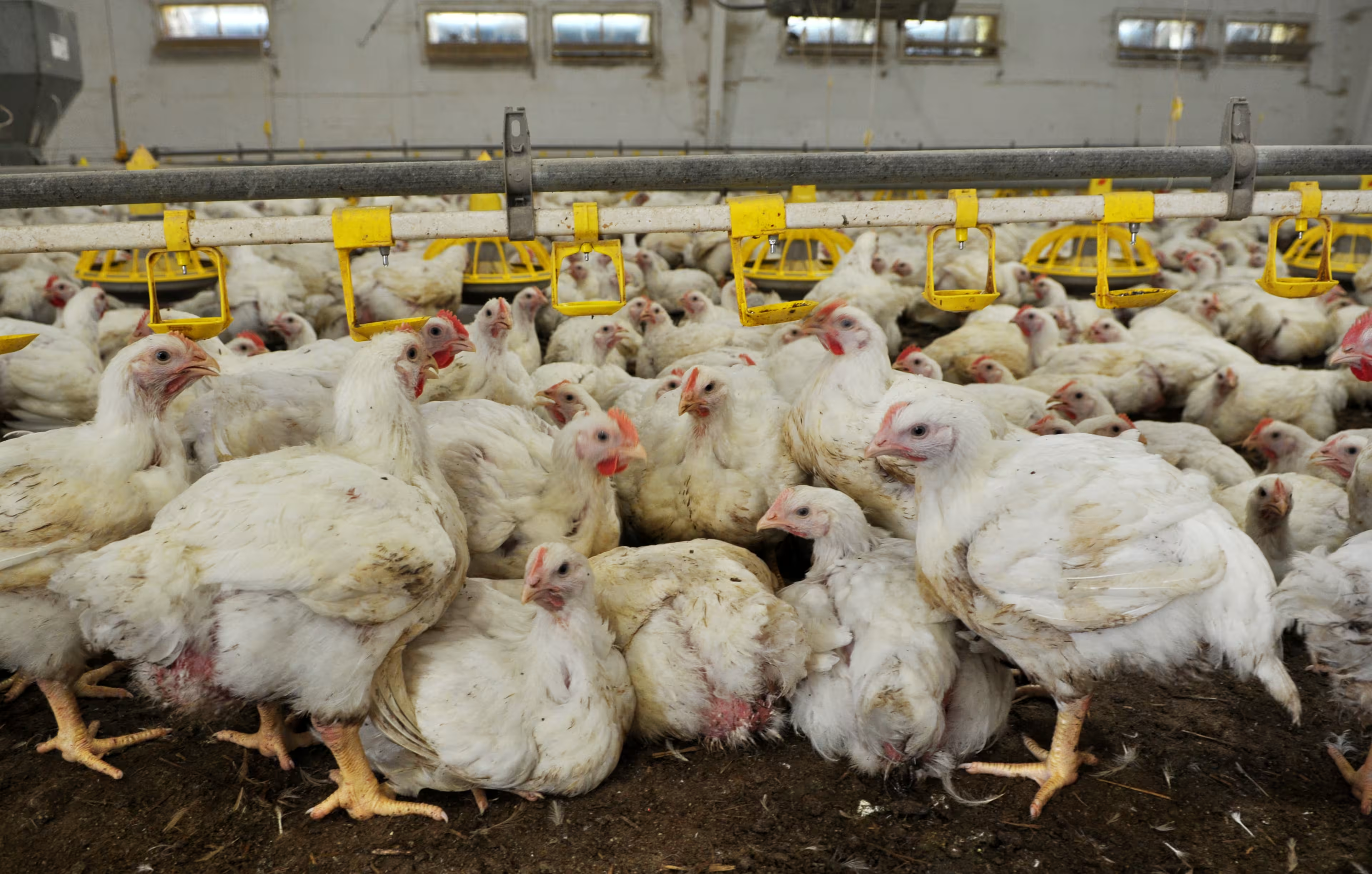


Having been successfully marketed as a cheap and easy kid-friendly meal, it’s no surprise that chicken nuggets have become big business, both in supermarkets and fast food restaurants.
When KFC re-introduced chicken nuggets across the United States last year, the chain sold 100 million nuggets in the first two months. Meanwhile, McDonald’s makes just as much money off of their chicken products as they do beef - a whopping $25 billion USD.
But where do all these chicken nuggets come from, and what are chicken nuggets really made of? The origin story starts on factory farms.
How are chicken nuggets made?
To thoroughly understand what goes into chicken nuggets, it’s important to first learn about the broiler chickens - chickens raised for meat - used to make them.
Broiler chickens are born in a hatchery
The suffering begins with breeder (parent) birds, long before broiler chicks are hatched. To maximise the growth of the offspring, breeder birds are selectively bred to be insatiably hungry, leaving many constantly starving. While policymakers and farmers in the UK pride themselves on what they consider high-welfare farming, breeder birds offer a perfect example of how the industry is failing to protect animals from suffering.
When the eggs are laid, they are taken away to be hatched in a hatchery. They never see their mothers.
Chicks are moved to an intensive indoor housing system
Once they’ve reached the farm, chicks are dumped into massive sheds, where they spend the next few weeks of their lives. Most of the birds are kept indoors and are never given the chance to feel grass underneath their feet.
Their lives are short, but to maximise profit the chickens have been genetically selected to grow very large, very fast. Because of this, many suffer from health problems like heart attacks and mobility issues.
Chickens are transported to slaughter
Just a few short weeks later, the chickens are caught - often being painfully picked up by their legs and carried upside down - then packed into crates. The crates are put onto trucks, and shipped off to slaughterhouses.
This process often proves deadly, as birds are exposed to shifting temperatures, and their already fragile hearts are further stressed. Existing injuries can also be further aggravated.
Chickens are stunned and killed
For those who survive the trip to the slaughterhouse, the chickens are then stunned and killed. In the UK, this is generally done through gassing.
In other countries, like the US, chickens are often killed through electric baths combined with throat cutting. When electric baths are used, chickens are hung by their legs upside down in shackles, before having their heads run through a bath of electrified water for stunning. The problem is that if they simply lift their head above the water, the birds can remain fully conscious when the kill blade slices their throats.
Chickens are eviscerated and dismembered
Once killed, workers then break down the chickens’ bodies. They start by eviscerating them, or removing their organs, before moving on to dismembering them, separating their bodies into different parts.
Carcasses are rinsed and chilled
Removing organs, feathers, and other “waste” is a messy process, so one of the last steps before carcasses leave the slaughterhouse is a final rinse. After that, the dismembered bodies are chilled ahead of being shipped to their destinations.
Secondary processing
Secondary processing is everything that happens after carcasses leave the slaughterhouse. So, in the case of chicken nuggets, the bodies are further broken down, mixed with other ingredients, battered, and cooked. They are then packaged and sent to their destination.
What are chicken nuggets actually made of?
Chicken nuggets are of course made mainly of chicken. But while it may be tempting to believe nuggets are made of meat, an analysis of the offerings at two major chains reveals the reality.
What those researchers found is that there is just as much fat in the nuggets as there is meat - along with bones, nerves, and connective tissue.
What is so bad about chicken nuggets?
Despite their popularity, chicken nuggets have a dark side. Producing them puts animals, humans, and even the planet, at risk.
Environmental impact
Despite being touted as an environmentally friendly alternative to beef, chicken is by no means a climate-friendly option. Greenhouse gas emissions, land usage, and water pollution are all huge problems exacerbated by the farming of chickens.
Human health impact
Chicken meat is often seen as the healthy choice. But the fast-growing breeds of chickens used on factory farms lead to white striping, green muscle disease, and wooden breast syndrome.
In addition, some of the most severe health concerns come from the factory farms where they are raised. Scientists have repeatedly underlined the risk that factory farms pose to public health.
Birds on factory farms are bred to be extremely similar genetically, allowing disease to spread quickly. Staff also routinely interact with the birds, providing the perfect environment for avian diseases to mutate and infect people.
Animal suffering
It’s no surprise that chicken nuggets drive animal suffering, given that in order to produce nuggets, chickens have to be killed.
But even before they are slaughtered, chickens on factory farms are relentlessly suffering as companies prioritise profit over the wellbeing of the animals.
During their short lives, birds grow so big so quickly they often can’t support their own weight. Some birds can’t stand up, while others will die suddenly due to heart attacks. Most shocking of all is that these conditions would be preventable simply by switching to different breeds of birds that take longer to mature.
Are chicken nuggets unhealthy?
Chicken nuggets contain a lot more than chicken and are often high in fat and sodium. That’s especially true of the highly processed varieties found at most fast food restaurants and frozen aisles of supermarkets.
The fat comes both from their preparation (frying) and the fat that’s mixed in with the meat itself. Sodium is directly added for flavour.
What is the nutritional value of chicken nuggets?
According to McDonald’s, six chicken nuggets contain 261 calories, 13g of fat (that’s 19% of what we should eat in a day), half a gram of salt (10% of the daily recommended amount), and 15g of protein.
Those numbers are pretty startling, considering most consumers aren’t eating only six, but are also likely to include fries and a drink, or another sandwich.
The bottom line
The biggest impact you can make as an individual on the planet, and for animals, is to leave animals off your plate. Why not opt for one of the many plant-based options next time you visit a restaurant or reach for nuggets in the frozen aisle of the supermarket? We’re sure you’ll love them.
You can also join us as we campaign to improve the lives of chickens on factory farms. These intelligent, sensitive animals deserve better.We’re working to end the abuse by stopping the use of fast-growing breeds, as well as giving chickens more space and enrichment.
Join us as we work toward a brighter future for chickens.
SUPPORT OUR WORK FOR ANIMALS

About The Humane League UK
We are a charity ending the abuse of animals raised for food.
Learn More