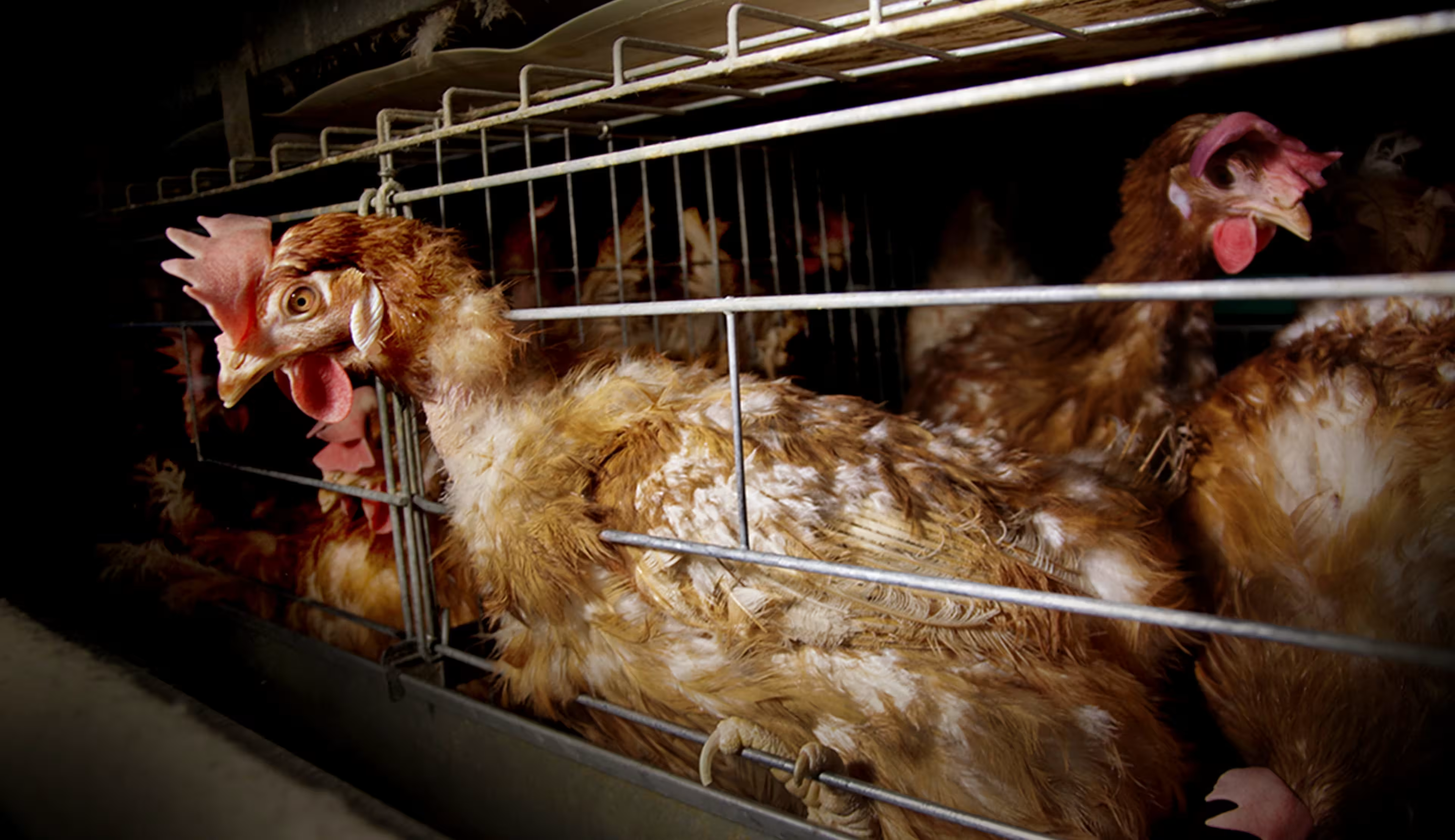
The UK likes to bill itself as a leader when it comes to animal welfare, but we’re still failing egg-laying hens by allowing millions of them to spend their lives confined to cages.
Despite a 2012 UK ban on battery cages, nothing has been done to stop producers from using so-called ‘enriched cages’ to house the mother birds. Enriched cages only provide a marginal relief to the suffering of layer hens. Still, the birds have only roughly a sheet of paper’s amount of personal space, and as a result, can’t so much as fully stretch out.
Let’s take a look at the state of legal cages for hens in the UK.
Legality and Regulations of Cage Farming in the UK
When it comes to the UK and cage farming, there’s always both good and bad news. The good: traditional battery cages for egg-laying hens are banned. The bad: they have been largely replaced by so-called enriched cages, which provide only the barest improvement for hen welfare.
On pig farms, gestation crates have been outlawed for decades; while they’re pregnant, mother pigs must be able to stand and turn around. However, the story changes once they’re ready to give birth - they’re moved into a farrowing crate where they are largely unable to move while they nurse their young.
Current Legislation on Caged Hen Farming
Raising egg-laying hens in traditional battery cages – the ones that provide less space than a standard sheet of paper – has been banned in the UK since 2012. However, this doesn’t mean that all eggs in the UK are cage-free. Instead, there are two ways that eggs from caged hens make it onto grocery store shelves.
The eggs could come from hens who spend their lives in enriched cages, which give birds about as much space as a standard sheet of paper. Instead of being completely barren, they’re close to barren, typically offering only a perch and a little scratching pad. In short, they represent only the barest welfare improvement over traditional battery cages.
In July 2023, the UK signed onto The Comprehensive and Progressive Agreement for Trans-Pacific Partnership which, among other lengthy trade standards, allows powdered and liquid eggs from chickens in battery cages raised in other countries to be sold in Great Britain.
Exceptions or Exemptions to the Cage Ban
The UK’s battery cage ban exempts enriched cages, which are slightly larger but only slightly better from a welfare perspective.
Legality of Caged Eggs in the UK
Eggs from hens housed in cages are still prevalent in the UK, despite the ban. This is because importers don’t have to follow the same laws as local producers.
Housing Conditions for Caged Hens
It’s not just their inability to behave naturally that stresses caged hens out, it’s also the broadly deplorable conditions.
A recent investigation of a farm (that at the time was linked to Lidl) found cages in which hens were living alongside the carcasses of other birds. Footage also documented workers brutally killing chickens without any form of pain management.
Access to Food and Water in Cages
Keeping birds in cages does not mean that they’ll have access to water and food. In fact, many of the carcasses documented in the investigation above apparently died from starvation and water deprivation.
What Is an Enriched Cage?
An enriched cage, or furnished cage, is basically a fancy battery cage. They provide slightly more space per bird and offer litter, a scratch pad, and a perch for the birds. However, they provide only minimal welfare improvements and still prevent the hens from expressing natural behaviours, such as stretching out their wings.
Minimum Cage Size Standards in the UK
Like other countries, the UK doesn’t mandate that cages be a certain size. Instead, they mandate that each bird be provided with 750 cm2 of space.
UK Standards for Hen Welfare
The UK prides itself on having high standards for animal welfare compared to the rest of the world. However, with other countries completely failing on the issue of hen welfare, this doesn’t in itself mean that the UK is doing enough.
A total ban on cages – including the import of products from birds in cages – is necessary before the UK can honestly claim to be a leader on hen welfare.


 THL
THL