


Why recreational fishing is bad for fish
We explore why fishing is such a hurtful hobby and find out the ways you can help.
 Maddy Dawe


We explore why fishing is such a hurtful hobby and find out the ways you can help.


The picture of someone fishing on a summer's day, sitting beside a vast open lake, may make you feel nostalgic, romantic or bring back fond memories of childhood. It’s hard to see how such a seemingly peaceful activity could cause suffering. But sadly, for the fishes involved, recreational fishing is far from fun.
Is fishing cruel?
“Don’t worry - I put them straight back in the water!” - this is a phrase I’ve heard many times in defence of recreational fishing. This may make things seem better - as long as the fish isn’t being killed and eaten, then it’s all ok, right?
Unfortunately, the experience of being hooked and pulled out of the water ranges from very stressful to downright terrifying for fishes. Whether you fish in order to take fishes home to eat, or just for the thrill of the catch, the welfare of the fish is always going to suffer.
Do fish feel pain?
The science is clear on this one: fish do feel pain. Fish sentience has been hotly debated for many years in the scientific community, but there is now plenty of evidence showing that not only can they feel pain, but they will try hard to avoid it.
Anatomy
Fish feel. Whilst the anatomy of a fish is different to ours in many ways (and different to one another’s - with over 34,000 species of fish, they are a varied bunch!) fishes have the necessary biological equipment to feel a range of emotions and sensory experiences, including pain.
Fish have ‘nociceptors’, which are neurons that detect things in their environment which may cause harm, such as hot temperatures, dangerous chemicals - or a sharp hook. Studies have shown that, when the fish’s nociceptors detect something that may cause pain, they will release the same natural painkillers as humans to protect themselves.
The brain of a fish is again quite different to that of a human, but this does not reduce their ability to feel pain. Fishes have something called a ‘pallium’ which scientists have concluded serves a similar function as the human neocortex and is evidence of fish sentience. This difference had previously been the reason many scientists argued that fish could not be sentient, but this has since been disproven.
Behaviour
There is also evidence of fish behaviour that demonstrates a pain response. Studies on rainbow trout, one of the most commonly farmed fishes in the UK, showed that exposure to painful stimuli resulted in unusual behaviours, such as rocking back and forth and fast breathing.
Similar studies with zebrafish also showed reduced swimming and avoidance of the substance that caused the pain. The change in behaviour lasted as long as six hours.
For more information about how fish feel pain, check out this article.
How are fish caught?
In fishing, a float, attached via fine string to a rod, is thrown into the water which has a hook attached to it, along with some bait. The bait (usually insects or smaller fish) is used to lure the fish towards the hook. Once the fish is biting, the fisher will manoeuvre the hook to pierce the fish’s mouth - the fish is trapped and cannot swim away.
You can imagine that having a sharp metal hook forced through your skin without anaesthesia is an agonising experience. It can be hard to understand that fishes are experiencing pain as they don’t cry or yell out like we would - however, fishes are known to writhe around and desperately try to escape the hook once caught, key indicators of stress response.
Fishes have also been known to accidentally swallow hooks, leading to either a painful removal by the fisher (ripping the hook out, damaging their throat on the way) or being left inside their bodies, resulting in illness and ultimately death. It is also not uncommon for the line to snap, leaving the fish stuck with a hook through their mouth which may stay stuck and cause pain for some time particularly if the hook is barbed.
The trauma of fishing doesn’t end there.
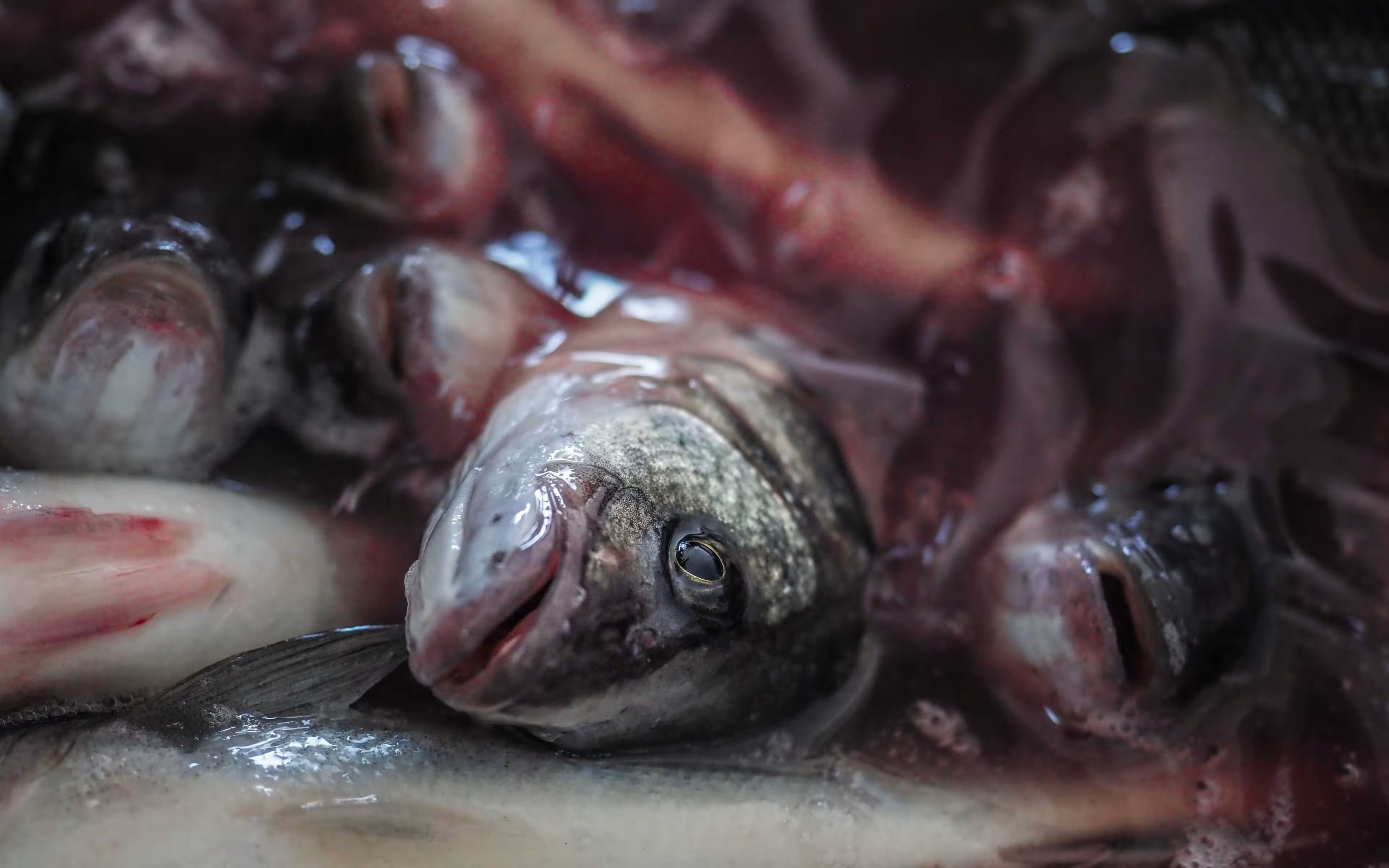
When pulled out of the water, fishes immediately begin to suffocate as they are unable to breathe . Being pulled onto land, often for several minutes, is the equivalent of a human held underwater. The fish drowns from lack of oxygen slowly and painfully.
If the fisher is practicing catch-and-release, the hook will be removed from the fish, leaving an open wound, and they will be thrown back into the water, which is stressful for the fish.
If the fish has been caught to be killed and eaten, a painful death awaits. Most fishes caught recreationally are killed in one of the following ways:
A blow to the head.
Many fishes will be hit on the head by the fisher in order to knock them out. This may sound straightforward but it requires the right amount of force, and the correct placement of the blow on the fish, to effectively cause loss of consciousness.
This is not always achieved, and fish can reawaken, which may not be obvious to the fisherman. This results in great suffering for the fish as they are left to suffocate to death.
Breaking the fish’s neck.
A fisherman may use their hands to snap the fish’s neck. This is incredibly painful, and again, is not always carried out properly so the fish does not always die straight away.
Severing the spinal cord.
The fish is cut into whilst still awake and their spinal cord is sliced. To do this without first making the fish unconscious is incredibly inhumane.
Asphyxiation in ice slurry.
The fish is left in a bucket of ice to suffocate. The loss of oxygen leads to a very slow death. Fishes do not die immediately out of water - they have been known to retain consciousness for anything from several minutes up to several hours.
Gill-cutting.
Fishes’ gills are cut into or torn open, severing a major artery and bleeding them to death.
Ultimately, due to the lack of legislation for fishers or clear guidance on how to kill a fish more humanely, they could sadly be killed in a number of awful ways.
What if I put them back in the water?
Catch-and-release fishing is very popular. This is where the fish is not kept or killed but is returned to the water after catching. You may think that a fish will swim away and continue going about its usual activities after being caught, but evidence shows that this is not the case.
Aside from the pain of the hook and suffocation, fishes also find being handled highly distressing. Fishes have a fine layer of mucus protecting their skin. Touching a fish - or worse, grabbing them to remove a hook, and trying to hold onto them whilst they struggle in pain - results in damage to this outer layer and loss of scales. This can injure the fish and leave them susceptible to infections. Fish gills and fins are also very delicate and grabbing them is likely to cause harm.
Fishes also suffer from something known as ‘decompression sickness’. When a fish is dragged from the water, the dramatic change in pressure can disrupt the fish’s blood flow and expand its swim bladder up to twice its normal size. Their internal organs can rupture, leading to serious injury and death.
It’s not just about pain - fish experience stress and panic, too. They release the same fight-or-flight hormones that humans do: adrenaline, noradrenaline and cortisol.
Studies have shown that fishes who produced more of these hormones when removed from the water, implying that they found the experience more stressful, were later observed to be more difficult to catch. This indicates that they were now fearful and wanted to avoid the experience.
What can I do to help?
It can be hard to leave traditions and hobbies behind. If you have previously fished recreationally, look into other waterside activities that can provide similar joy and satisfaction. Try to remember that whilst fishing may be a fun hobby for you, it is ultimately a blood sport.
If you found this article interesting, you can learn more about fishes and their welfare by exploring our range of blogs below.


SUPPORT OUR WORK FOR ANIMALS

About The Humane League UK
We are a charity ending the abuse of animals raised for food.
Learn More