


This Easter, the poultry industry is getting its eggs in a row to defend animal cruelty
Chickens are a classic image of Easter, but are suffering on an industrial scale
 Sean Gifford


Chickens are a classic image of Easter, but are suffering on an industrial scale


Chicks are a classic image of Easter. Little yellow fluff-balls are sold as toys and decorate cards and gifts throughout the season. Eggs, painted and chocolate, stand in as symbols of bounty and new life.
Chickens are in fact the most populous vertebrate animal in the UK - according to the latest figures there are around 177 million chickens alive at any given moment in the UK, and over one billion are bred, raised and killed in the UK for meat every year. So why, beyond the golden chicks on Easter decorations and the naked, headless bodies on supermarket shelves, do we rarely see these animals? Where are all the chickens?
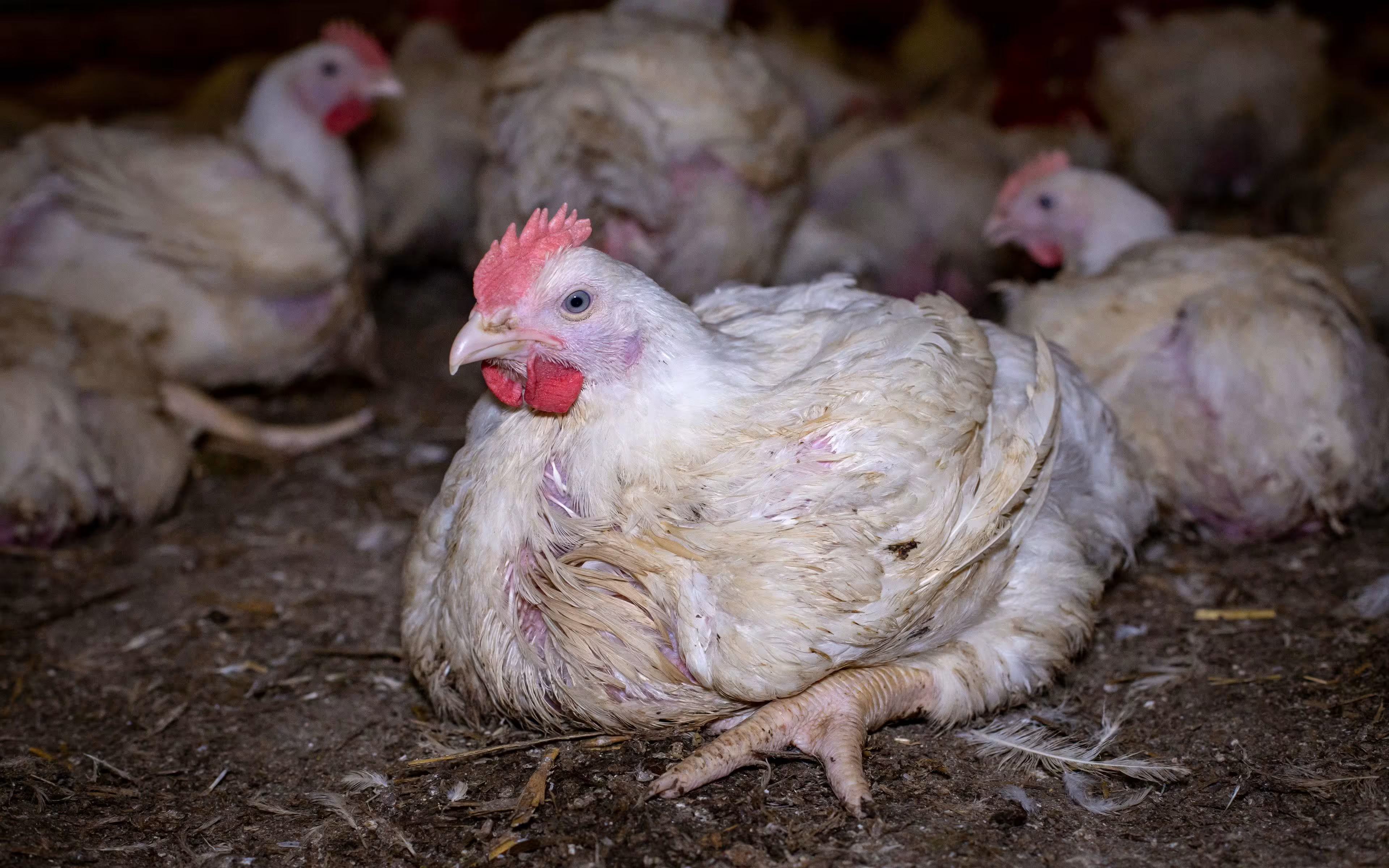
The answer is unfortunately an unhappy one. They are housed in enormous sheds, in industrial farms, which sit like pockmarks across much of the British countryside. Most never see the light of day, apart from perhaps a glimpse as they are taken to the slaughterhouse. Some of these farms are so large that they have been designated ‘mega-farms’, containing over 125,000 animals. That’s more than the population of Lincoln in a single farm.
I’ve had the pleasure of seeing young chickens at play in an open space. They stretch and flap their wings, wrestle and strike each other with their legs, and chase one another around in the dust. Open air and sunshine, bracken and twigs in which to forage, space to stretch wings and to bathe in the dirt - this is how chickens should live.
Yet for over 90% of UK chickens, such conditions are a pipedream - one sold enthusiastically to shoppers by retailers like Lidl, who campaigners have caught using misleading free-range imagery to sell the fruits of factory farms. The conditions in these factories are shocking. Chickens live in layers of their own waste stinking of ammonia which burns their feathers and skin. By law, farmers are allowed to keep up to 19 chickens per square metre in their barns - think about living in a packed commuter train, with no bathroom, for your entire life. Imagine the flared tempers, frustration, the pain and you will begin to see the depths of suffering these animals face.
Crucially, the majority of chickens raised for meat belong to breeds who have been selectively bred to get as big as possible as quickly as possible. Born to suffer, these Frankenchickens suffer from endemic lameness, organ failure, muscle disease and death. Approximately half a million chickens die every week on UK farms. The signs of their wretched lives are even tattooed onto their corpses - burns, caused by lying in excrement, are visible on many of the chickens available to purchase in supermarkets.
Yet despite all this, if aliens landed in Britain and took a walk through their nearest supermarket they’d be forgiven for thinking chickens were important to us. They certainly used to be. Once upon a time chickens were worshipped as gods, and held as sacred on these isles. Julius Caesar noted that Britons did not slaughter chickens, but rather revered them. When chickens arrived in Britain they were prized as rarities and kept as pets only. They were delicately buried alongside their family members, their bones free from any marks of butchery. It turns out that raising backyard hens is more ancient and British than Boudica.
In this respect we desperately need to return to our roots. Not only are chickens no longer sacred in Britain, but they have the dismal honour of being one of the most abused animals in the country.
Yet this year everything might change for chickens. The Humane League UK will fight the Government in the Court of Appeals. We argue that the use of Frankenchickens in farming is illegal, and victory in the case could see the greatest animal welfare crisis in the UK undone. It would be a historic leap forward for British animal welfare standards which are in grave danger of dilution. Banning Frankenchickens would mean uplifting the lives of over one billion thinking, feeling animals a year.
Yet victory lies on the summit of a very steep hill. The British Poultry Council has joined Defra and the National Farmers Union in opposing our case, submitting arguments in support of breeding practices which cause millions of chickens to prematurely die. Despite their protests, it is not only animal activists, or the bulk of the general public, who are clamouring for change, but many farmers themselves, sick of being squeezed by supermarkets and forced to engage in more intensive and disturbing forms of farming.
Some may feel that the lives of chickens barely matter in a world scarred by bloody wars, volatile economics, dizzying inequality and a rapidly changing climate. Yet how we treat others is at the root of so many of our problems. If we choose to believe that sentient life matters, no matter how powerless or different to humanity it is, a world of possibilities opens up. We could teach our children that violence is wrong, no matter who the victim is. It might prompt us to choose more compassionate ways of eating, and take the suffering caused by habitat loss and pollution more seriously. It would undermine the dissonance which allows us to love dogs and cats, but hurt chickens, not to mention pigs, cows, fish, rabbits, sheep, turkeys and ducks.
Redefining our relationship with the rest of life on our planet is the defining task of this century, and abandoning the unbelievable cruelty of factory farming should be a major goal for compassionate people. Whether we win or lose, I hope our court case helps trigger a landslide of changing attitudes towards the diverse species who make up the majority of intelligent life on our planet. Perhaps one day we will cherish chickens not just as symbols of Easter, but as animals who matter in their own right.
SUPPORT OUR WORK FOR ANIMALS

About The Humane League UK
We are a charity ending the abuse of animals raised for food.
Learn More