


Why did KFC join the Better Chicken Commitment?
Jenny Packwood, Head of Brand Engagement at KFC UK & Ireland, explains why signing up to the Better Chicken Commitment was a crucial step.
 Matthew Melton


Jenny Packwood, Head of Brand Engagement at KFC UK & Ireland, explains why signing up to the Better Chicken Commitment was a crucial step.
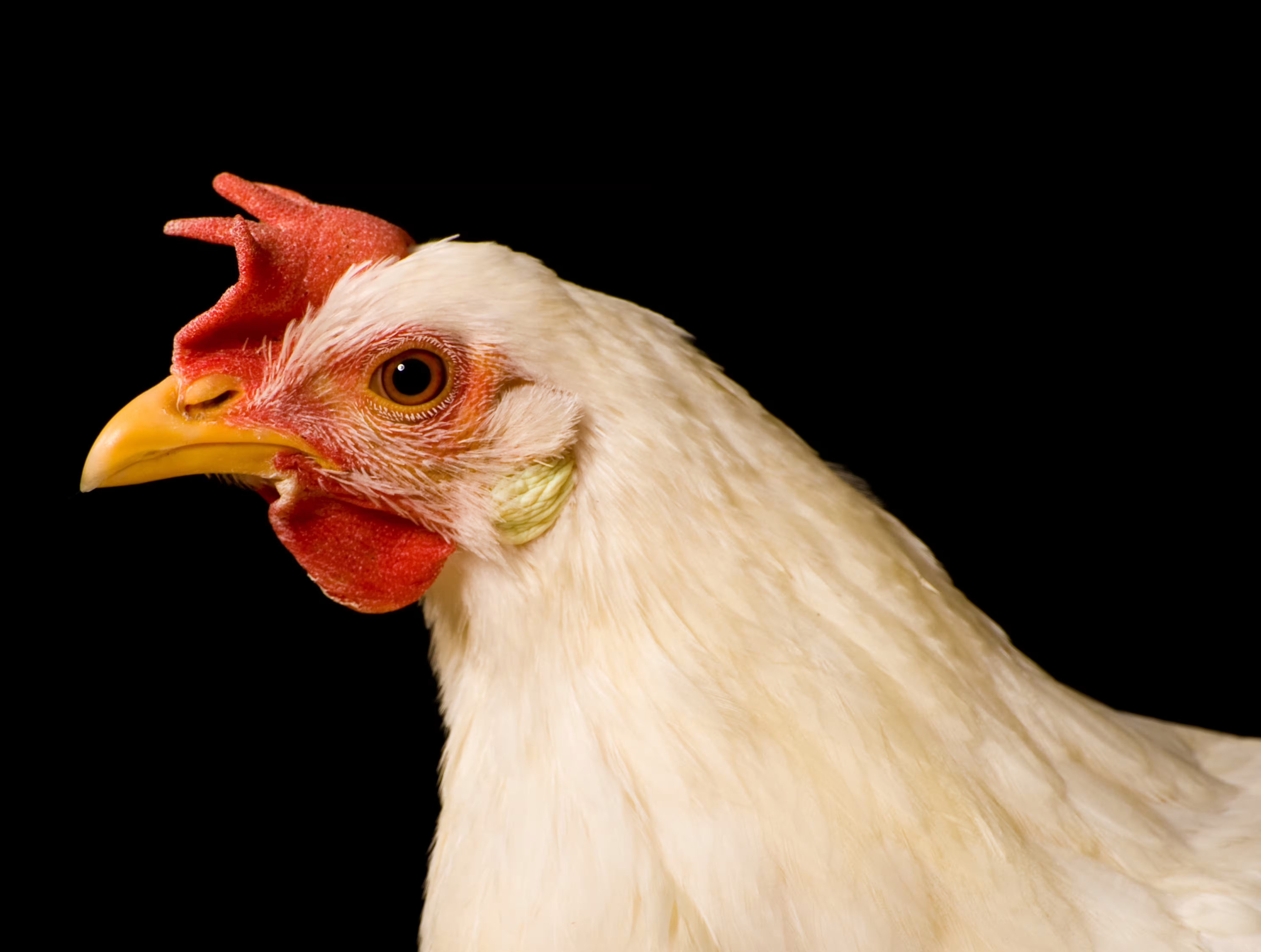


KFC signed up to the Better Chicken Commitment in July 2019, becoming the first fast-food company to do so.
Now, the company is encouraging others across the food sector to join them in improving the welfare of chickens and signing on to the Better Chicken Commitment (BCC). Jenny Packwood, KFC UK & Ireland's Head of Brand Engagement, tells us more.
Update February 2026
KFC broke its Better Chicken Commitment, instead joining a coalition of companies called the ‘Sustainable Chicken Forum’ which provides no public welfare targets, no transparent reporting framework and no roadmap for change. Read more here.
Chicken is central for us – it’s what we do and it’s in our name, and it's vital that we are trusted with what is at the heart of our business. Our customers rightly want and expect the chicken we serve to be good quality and reared with care.
So we’re committed to working towards best practice and improving the welfare of every single chicken across all of our suppliers. Whether it’s creating more space in barns, moving towards slower-growing breeds or implementing stricter auditing processes, we’re leaving no stone un-turned in our journey towards improvement.
Signing the BCC was a big step for our business – but we know it will help transform chicken’s lives for the better, as well as demonstrating just how seriously we take the issue of chicken welfare. That also matters a lot for us internally. It has been a huge source of pride amongst KFC and our franchisees that we have signed up.
Our iconic fried chicken is freshly prepared in our restaurants daily – but we believe great tasting chicken actually starts before that, with sourcing birds that have had a good life. Our chickens, like all other animals, deserve to be treated well – it’s as simple as that.
We’ve made great progress over recent years and there’s some things we do well, but there’s always room for improvement. And we’re determined to invest the time, energy and effort needed to achieve just that.
We were the first in our sector to sign the BCC and we encourage as many as possible in the industry to follow in our footsteps and do the same. Signing the BCC allows you to signal to your stakeholders, including your suppliers and customers, that you are serious about animal welfare, and that builds trust in a space where there is often a lack of transparency.
People are often surprised to hear that we represent a small percentage of the chicken consumed in the UK and we source from suppliers who also provide chicken to supermarkets and other restaurants across the country. So to make meaningful industry change, we’ll all need step up – and signing the BCC is a great way to hold yourselves accountable.
Both the concrete progress that’s been made towards the targets and the recognition we have received from our partners have been very rewarding.
It’s all well and good stating targets and goals but making progress towards them is what it’s all about and we’re really proud to be making genuine strides. That’s how we know we are doing the right thing and going about it the right way which, given the investments we’ve made, is both a relief and a reward!
But we know we wouldn’t be making such progress without the support, guidance and encouragement that we receive from partners, suppliers, franchisees - and of course NGOs such as The Humane League UK.
Our commitment means that we’ll continue to uphold the standards set out in the BCC, as a minimum, for future welfare practices. That said, signing up to the BCC was just the first step and we’re always looking at how we can improve, using our Annual Welfare Report as a way to transparently monitor our progress, and we will continue to work closely with suppliers and some of the biggest animal welfare NGOs to achieve this.
We also have our own Sourcing Code of Practice, setting the minimum, not the maximum, standards that all our suppliers have to follow and if they fail to meet them then we won’t work with them. It’s as simple as that.
FAI Farms, the organisation that produced our Welfare Report, gave us great support and feedback throughout the process of putting together the report and said the following:
“Suppliers to KFC UK & Ireland are in a strong position to implement the requirements stipulated by the European Chicken Commitment. The welfare programme have laid a strong groundwork by raising suppliers’ awareness about the benefits of lower stocking densities, improved enrichment, including adoption of natural daylight and restrictions of practices such as thinning. Bird health and welfare has always been of paramount importance to KFC UK & Ireland.”
And this really meant a lot. We have a firm belief in the importance of transparency and to hear from them that they feel we have raised supplier awareness on such issues and, ultimately, enabled them to progress on the journey towards the BCC requirements, is exactly what we set out to achieve.
It’s quite simple: if you don’t measure it, you can’t improve it. Whatever it may be. And I’d emphasise this point to any business that has made a commitment. There is no point setting that goal if you aren’t going to track your progress towards it, because tracking and reporting helps you figure out what works and what doesn’t, which is all part of the process when working towards an ambitious new target.
And second, would be to not be deterred by a sense of being a small cog in a big machine or by the potential for hard-to-digest findings. We overcame both of these issues with our first ever Welfare Report last year. There were some hard truths in it and KFC acting alone is not going to shift the dial, but by pointing out where problems lie, you can make progress on them and call on others to act too.
Quite simply, we have a collective responsibility to improve welfare in our industry. A number of brands, including Nando’s, have signed which is encouraging to see but it doesn’t go far enough. We should all be committed to working with our farms and suppliers to make sure we’re always pushing improvements to chicken welfare standards across our supply chain.
To those that have concerns, we’d tell them not to worry. A step in the right direction is better than no step at all and we are all in this together.
Without a shadow of a doubt, yes. Especially in the food industry. Supply chains are global now and no one actor is independent. We all coexist, and we all need to call for change simultaneously if we are to make progress. It is vital that across the wider industry we all demand and push for meaningful improvement in chicken welfare and large-scale farming as we can only succeed if we work together.
Transparency is key, and reporting our progress helps us hold ourselves accountable. It also shows our peers what can be done, the effort we are putting in and hopefully eases any concerns they may have about joining us. It helps start important conversations about a topic that has been avoided for too long now and we are committed to continuing and leading these conversations.
We know that over the next few years, there may well be some progress reports that we are disappointed with, where things haven’t gone to plan. But that’s alright. It’s all part of the process of figuring out what works and what doesn’t.
That’s the nature of driving change in a substantial industry – there are big hurdles to overcome. But we are committed to tackling them and we’ll be publicly reporting our results until we have.
More Like This

What is the Better Chicken Commitment?
What does better chicken welfare look like and why do we need the Better Chicken Commitment.

How investment firms can change 1 billion lives
Investors have power to affect a huge amount of positive change in the world. But there is one move that really can transform the lives of over a billion animals.

SUPPORT OUR WORK FOR ANIMALS

About The Humane League UK
We are a charity ending the abuse of animals raised for food.
Learn More